
Subscribe
Barely visible behind the swarm of television cameras and the long microphones pushed at him, actor Dileep did not look calm. It was the morning of December 8, minutes after a court in Kochi acquitted him of an eight-year-old crime. The court found him not guilty of masterminding the brutal abduction and sexual assault of his female colleague in the summer of 2017. His name had been the eighth on the list of those originally accused.
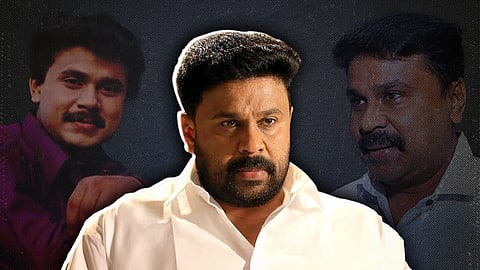
Dileep, in a white shirt and wearing his beard long, was not the picture of humility that he had always projected. The actor, one of the most powerful in Malayalam cinema, minced no words in his lashing criticism of the police — they were, he said, a gang of criminals concocting false narratives against him. If there was any criminal conspiracy at all, it was against him, Dileep said, and it began nearly nine years ago, on the day that his former wife and prominent actor Manju Warrier said at a public meeting that there was a conspiracy behind the assault of their young colleague. There was no mention of the survivor in his statement, not even to wish her well.
A streak of vengefulness, which several people in the industry have accused Dileep of, appeared evident in his body language.
Who is Dileep
Tracing the journey of a powerful man back to his humble beginnings can reveal a lot about him, or at the very least about the journey itself. Dileep — mimicry artist turned actor turned producer and distributor — became one of the most recognisable faces of Malayalam cinema in the span of a decade. It began, as such journeys often do, with a string of lucky coincidences.
If one day in the early 1990s, writer and filmmaker Ansar, travelling with a fresh script in his hands, had not spotted Dileep waiting for a bus outside the Ernakulam Town Hall, would he have cast him in Maanathe Kottaram, the film that made a hero out of him? If, earlier in the 90s, filmmaker Kamal had not watched Dileep walk away, lugging a big bag down a flight of stairs, would he have been called back and offered the job of Assistant Director that he was late for?
Dileep would have found another way in, you can tell, witnessing the growth and the soundness of his schemes for quick and lasting success. He was always a man with a plan.
The actor would become producer and distributor and enjoy immense support even in his darkest days after being named an accused in a most heinous crime. As Dileep stands acquitted, it is time to look at his rise and fall.
Making a living with mimicry, turning AD
Dileep’s rewarding quality in his early years was his patience. Gopalakrishnan Padmanabhan, a Kochi boy born in 1967, assumed the name of Dileep on stage, hoping to carve his way into cinema. He had for years performed mimicry on stage and made popular audio tapes with his friend and artist Nadirshah. He had a stint in television with a comedy show called Comicola, and assisted director Kamal in film after film, all the while wanting to act and hoping he’d be given a role.
“He would not tell me anything, but he’d ask other ADs to suggest his name for a role. Finally I cast him in my film Ennodishtam Koodamo (1992, featuring Madhoo and Mukesh),” Kamal says.
Dileep played a forgettable character as one of Madhoo’s collegemates, with just a few lines. He got other minor roles, notably in Mammootty’s military movie Sainyam (1993), as one of the cadets. And then of course came Maanathe Kottaram in 1994, when he played the main lead.
“When I wrote Maanathe Kottaram, I wanted little-known actors to play the roles of fans of a celebrity that Khushboo played (as herself). I knew Dileep from his mimicry acts but it was after watching him at the bus stop that day that it struck me to cast him as the main lead. I called him and the others to Room no 21 of Hotel Orchid for an audition. Dileep nailed it. It was on his suggestion that we also got Nadirshah on board,” says Kalabhavan Ansar, scriptwriter and director most known for comedies such as Mimics Parade and Kasargode Khadarbhai.
Ansar says Dileep would not believe him when he made the offer. “He asked if I was making fun of him and that he would do any role at all, let alone the lead character. I remember the day that I called him to say that it was final, that he won the audition. He let out a shriek and yelled Eeshwara (‘God’) — a gesture he would enact in the film,” Ansar adds.
Back then, Dileep was not entirely unfamiliar to the audience in Kerala, who would have watched his popular mimicry videos which used to come out in the late 1980s and early 90s. KS Prasad, who has directed many of these videos under the Cochin Guinness banner, says those were probably the first visuals of Dileep in front of a camera. “He would mimic Pratap Pothen, Lalu Alex, Innocent, and Jayaram,” Prasad recalls.
Dileep mostly performed with the troupe Harisree, but also occasionally joined Kalabhavan, the renowned arts centre in Kochi that has produced many adored artists like Jayaram, Kalabhavan Mani, Siddique, and Lal.
Mimicry as an art form began to gain popularity in the 80s and 90s when the performers did impressions of known personalities, especially film actors. Father Abel, the founder of Kalabhavan, is often credited with the growth of mimicry in Kerala. Members of Kalabhavan would play a big role in drawing attraction to the art and finding an audience not only in Kerala but among Gulf Malayalis. It became a source of income for many artists.
Mimicry also found a place in television and in video and audio cassettes. Dileep and Nadirshah cashed in on the trend and brought out a comic series called Dhe Maveli Kombathu for several Onam seasons in the 90s.
But what made mimicry even more appealing for young people looking for a way to work in films was the route set by early performers like Jayaram. The popular actor, known for his family dramas and comedy in Malayalam and Tamil cinema, had begun with Kalabhavan fresh out of college and quickly got noticed for his impression of yesteryear star Prem Nazir.
Jayaram soon entered cinema and found overnight success. This paved the way for many more mimicry performers to try the same route. Siddique and Lal, a director-duo known for their extremely popular comedies of the 90s, followed the route. So did actors like Sainudeen, Kalabhavan Mani, Dileep, and Nadirshah.
Nadirshah also found success as a singer and filmmaker. The two would go on to start a restaurant chain called Dhe Puttu in 2013, nearly 20 years after their first film together.

Jayaram was also instrumental in Dileep’s growth. He introduced Dileep to Kamal, who agreed to take him on as an AD in his next film. That turned out to be Jayaram’s Pookkalam Varavayi (1991) — the one that Dileep reached the set late for.
Incidentally, Kavya Madhavan, who would go on to become a popular actor and Dileep’s second wife, played the role of a toothless six-year-old in Pookkalam Varavayi.
Becoming lead actor
Maanathe Kottaram, notwithstanding the doubts of acceptance of a new cast, was a roaring success. “He never forgets to mention his humble beginnings, he has always spoken about those early days,” Ansar says.
After Maanathe Kottaram, Dileep began to get offers, taking the place of the new young hero, alongside the experienced Vineeth and the 20-year-old Kunchacko Boban who burst into the scene in 1997. A number of films placed him as one among two or more lead characters, ‘second hero’ or supporting actor in romantic comedies. He played the second male lead in Sallapam (1996), the film that launched Manju Warrier as a heroine at the age of 16.
Dileep and Manju would act in a number of films together, including Kamal’s Ee Puzhayum Kadannu, before getting married in 1998.
“I had felt bad that I didn’t cast him as lead in any of my films earlier, so I was happy to have him in Ee Puzhayum Kadannu,” Kamal says.
The film served more as evidence of Manju’s acting prowess with her witty dialogue deliveries and unique voice modulations, and won her a State Award. In the span of two years, she would play unforgettable characters in movies like Krishnagudiyil Oru Pranayakalathu (1997), Summer in Bethlehem (1998), and Kannezhuthi Pottum Thottu, which won her a special mention at the 1999 National Awards.
Dileep also got his due, with movies like Punjabi House (1998), in which he used his mimicry skills to play a man faking speech and hearing disability. Clearly he was at his best when he attempted comedy, and an audience grew for his brand of light-hearted fun movies, laced with sentimentality.
Post marriage, Manju stopped acting and Dileep got his big break. Meesha Madhavan (2002), featuring him as a thief of the Robinhood flavour, only more crude, would win hearts. Kavya Madhavan, who had by then grown into a teenager and quickly grabbed attention, played the female lead in the film, which became a template for their future films together. The two would be celebrated as a favoured pair and act together in a number of films that would go on to cement Dileep’s place as a star.
Quick rise to stardom, power
In the early 2000s, Dileep’s films began to shed the paavam (vulnerable) hero image and take on more macho characters of the Meesha Madhavan brand, unapologetically misogynistic in the guise of humour.
A rape joke in Meesha Madhavan, directed at a sleeping figure of Kavya Madhavan, has been much criticised, but only in later years. At the time, it was missed, along with his transphobic portrayal in Chandupottu (2005). Dileep played a queer character, who was assigned male at birth but raised as a girl by his grandmother, who grows into a gender nonconforming person. He played a stereotypical belittling version of a queer person who is mocked and chased away by others. LGBTQIA+ activists have spoken out about the harm this character has brought to their lives.
Dileep would go on to play the funny hero, winning laughter and applause, inserting crass remarks that were meant to show women their place, much in line with the flavour of movies made by Balachandra Menon in the late 80s.
This was a period (2000s) when Malayalam cinema found itself in a slump, lost some of its best writers and filmmakers, and the superstars fell into the trap of cliched hypermasculine characters spouting preachy monologues. Dileep’s brand of slapstick humour seemed like something fresh and light, just the thing an audience drained by heavy dramas desired.
In Ishtam, he played the devoted son who keeps getting his dad out of trouble and made father-son relationships look like fun. In Kunjikoonan, he played a double role, one as the funny hunchback and the other as a blue-eyed man, making each look strikingly different from the other. In Thilakkam, he played a man with memory loss who goes on to strip mundus off people. And in Sadanandante Samayam, he made a satire on superstitions with self-deprecating humour.
Once he attained stardom, Dileep did not waste time, after all the years of patience he had shown to gain an entry into cinema. In 2003, he turned producer, making and starring in what would be one of the most popular comedies of all time — CID Moosa.
Despite its slapstick trope of the lousy detective, à la Pink Panther, the film won praise from serious filmmakers like Adoor Gopalakrishnan. Adoor would mention this as his favourite Dileep film when he cast him as hero in Pinneyum (2016).
Dileep also produced an art house film by TV Chandran called Kadhavaseshan in 2004, which was expected to bring him his first state award for Best Actor, but that would take another seven years (Vellaripravinte Changathi, 2011).
A number of notable movies in the mid and late 2000s would seal his place among the top stars of the day – Thilakkam, Gramaphone, Runway, Kochi Rajavu, Lion, Vinodayathra, Calcutta News, and Mulla. Dileep was no longer the meek romantic hero, he could be the tough goon (Mulla), the geeky journalist (Calcutta News), or a smart smuggler (Runway).
However, it was in 2008 when Dileep became the producer of a big budget ensemble film called Twenty20 that people took notice of the heights he’d reached. With its ensemble cast that included all the big male stars (Mohanlal, Mammootty, Suresh Gopi, Jayaram, etc.), the film was a prestigious project of the Association of Malayalam Movie Artists (A.M.M.A.) meant as a fundraiser for struggling actors. It became a huge success and Dileep won plentiful success and popularity.
“He was ambitious and quite business-minded. In a few years he was able to make the most out of the popularity he gained... unlike many of us in the field who think little of the financial gain you could make out of art,” Kamal says.
Actor Prakash Bare echoes the sentiment. “Stardom is a measure of your popularity and goodwill, but not every actor tries to convert that to power. Dileep is someone who cleverly does that. He has a bunch of people who listen to him to tackle the competition [from other actors] and to deal with those who don’t agree with him in different areas,” Prakash says.
He and Dileep were part of Shyamaprasad’s 2015 movie Arike; however, they had not seen each other during the filming, Prakash says. His impressions of Dileep come from being an insider in the industry and hearing experiences of colleagues who are scared to come out in public.
Controversies, stories of vengefulness
Around this time – 2008 – Dileep would be embroiled in a controversy that would for the first time shake his image — cultivated through media interactions and public appearances — as that of a humble, naive man. It began with Dileep backing out of a film by director Thulasidas after signing the contract and allegedly taking the full advance of Rs 40 lakh. He allegedly delayed giving dates for two years and demanded that the director should be changed. Matters escalated to the Malayalam Cine Technicians Association (MACTA), then led by director Vinayan, which issued a ban on the actor. This would lead to bigger conflicts and the tables would turn on Vinayan.
(Above: Vinayan on Dileep / Courtesy - Reporter TV)
At this point, Dileep had become someone to reckon with not only within the film industry but also in associations like A.M.M.A. This would be proven by how many from the industry rallied behind Dileep, eventually leading to the disbanding of MACTA and the formation of another association called FEFKA (Film Employees Federation of Kerala). Led by filmmaker and producer B Unnikrishnan, FEFKA stood with Dileep.
Vinayan was unofficially banned and actors would be asked not to work in his films. Those who ignored the ban were also refused work in other films. Veteran actor Thilakan, who broke the code and worked with Vinayan, lost a lot of opportunities, he said. Thilakan had publicly denounced Dileep as a “poisonous” person.
Anecdotes shared by Thilakan and Vinayan in interviews carried a similar storyline. They both alleged that offers that were made to them were suddenly withdrawn, at the behest of Dileep. Vinayan has quoted examples to prove his allegation that Dileep was a vengeful man and would not spare anyone he has an issue with.
Vinayan’s own issues with Dileep began during the making of Ooma Penninu Uriyada Payyan (2002). The two of them had worked together in a few movies before, such as Anuraga Kottaram and Mammootty’s Rakshasa Rajavu. Vinayan had originally asked Dileep to play the male lead opposite Kavya Madhavan in Oomapennu, a film about two people with disabilities falling in love. But when Dileep heard that Kaloor Dennis was writing the script of the film, he wanted him replaced with a younger writer, Vinayan said in an interview. Vinayan refused to send Dennis away and replaced Dileep with Jayasurya, in his first role as a hero.
In 2008, when Vinayan and MACTA became instrumental in issuing a ban on Dileep for not fulfilling the contract in Thulasidas’ film – the aftermath was immediate. Vinayan said that Dileep, who then ruled the industry, decided that ‘Vinayan should no longer be in the industry’, and that the superstars and producers also turned against the director.
MACTA sank soon after and Vinayan struggled for years with none of the mainstream actors, including the ones he had introduced, willing to act in his films. Dileep was a big manipulator, he alleged.
Another organisation that suffered in a similar manner was the Kerala Film Exhibitors Federation, led by Liberty Basheer. In January 2017, Dileep put together a rival group called the Film Exhibitors’ United Organisation of Kerala (FEUOK) to challenge Basheer’s monopoly, when the exhibitors had gone on a strike. Dileep’s new organisation was trying to destroy him, Basheer said.
Actor assault case
A similar allegation would be made by a woman actor years later – in December 2015 – accusing ‘a popular actor’ of causing her to lose work opportunities. She said that it was helping a female friend who had some family issues that brought on this reaction. Though she did not name him, it was understood to be Dileep, and the female friend his former wife, Manju.
A little more than a year later, the woman actor would be abducted and sexually assaulted in a moving car in Kochi — the case that put Dileep behind bars for months. Eight-and-a-half years after the attack, the verdict on December 8, 2025 would acquit him of the crime.
Despite a media gag that Dileep secured at the beginning of the trial, the case never faded from the public eye, with petition after petition delaying the trial for years, and newer developments and counter cases cropping up. Dileep never stayed idle.
After his arrest in July 2017, the trailer of his upcoming film Ramaleela began to circulate online. It appeared to contain close to life references with Dileep quipping lines like “it seems like someone is determined to make me the accused.”
There was some initial public anger that led to people setting fire to a unit of Dhe Puttu in Kochi. But there would be some quick and efficient damage control in the weeks afterward.
As it happened during the MACTA controversy, Dileep began to garner support from within the industry. Actors Siddique and KPAC Lalitha famously held a press conference in his support. The A.M.M.A., which had suspended him after the arrest, decided to reinstate him a year later, while he was still the accused — a move that would once again prove the influence he had among his colleagues. Dileep refused to join while the case was going on, but the association’s gesture led the survivor actor and three of her colleagues to quit. They were all part of the Women in Cinema Collective (WCC), formed in the aftermath of the crime, recognising the need for a space for women to assert their rights and look after their welfare.
Dileep also found allies in the media, with a woman’s magazine printing a cover story of his family, along with Kavya Madhavan and the children. In 2017, when the crime took place, Dileep had got a divorce from Manju and married Kavya. Manju, who had stopped acting after getting married, made a comeback in 2014, the year after her divorce, and went on to attain stardom in Malayalam and Tamil. In 2016, Kavya stopped taking new acting offers, after her marriage with Dileep.
Dileep’s own movies suffered a setback. Ramaleela did well, but afterward his movies appeared to take a hit, with one of them not even getting a theatre release and coming out on streaming platforms. “I haven’t watched any of his movies in recent years, mainly because I don’t think many of them were suited for Dileep,” Kamal says.
Dileep produced quite a few of these films individually or jointly, including Keshu Ee Veedinte Nadhan (2021), Voice of Sathyanathan (2023), and Pavi Caretaker (2024).
His clout would once again be evident, as years ticked by and more and more mainstream actors, including the superstars, began to publicly back Dileep, promoting or appearing in his films or alongside him in public events.
Those who did not toe the line did not have it easy. Late filmmaker Balachandrakumar, whose revelations in 2021 had been treated as crucial evidence in the case against Dileep, was scared stiff of the actor, Prakash Bare says. “I have interacted with him in those days and he was scared for his life. It is the fear that finally drove him to come out and speak and get protection.”
Hacker Sai Shanker too had spoken of fear, after he became a witness for the prosecution and spoke about the phones Dileep’s lawyers had asked him to clear data from.
The fear seems palpable, and not quite perhaps a figment of so many people’s imagination when the first reaction of the man, acquitted of a sexual crime, is to speak with little suppressed anger against the police force and drag in his ex-wife who spoke up for the survivor.