
Subscribe
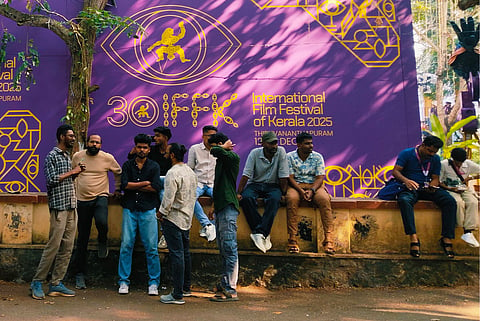
Something is quite young about the International Film Festival of Kerala, organised by the Chalachitra Academy, as it turns 30 this December. You have to wonder if, like human beings who try to pass for younger versions of themselves, the festival is attempting to look and sound younger.
A significant number of films selected for the festival are coming-of-age stories, featuring children and teenagers whose narratives originate from all corners of the globe. There are also some hard-hitting tales of the elderly, and a mix of classics and new-age dramas.
Starting December 12, select cinema halls in Thiruvananthapuram will turn into festival venues for a week screening 206 films from 82 countries. The festival opens during a tense period for Kerala, caught between two major events: the verdict in the high-profile 2017 actor assault case, which falls on the opening day, and the local body election results, scheduled for December 13. This political atmosphere is amplified by the fact that the IFFK had previously shown solidarity by featuring the survivor actor as its chief guest. The festival has also consistently made clear its pro-Palestine stance, more pronouncedly so since the war in Gaza began in 2023.
December and the IFFK have become almost inseparable, except in two harrowing years of COVID-19. The 2025 edition will begin with the grand opening ceremony, showcasing the cultural heritage of Kerala, and presenting the Spirit of Cinema award – constituted four years ago to honor fearless female filmmakers. This year it goes to Kelly Fyffe-Marshall, “a Canadian filmmaker known for socially conscious storytelling,” according to a release sent by the Kerala State Chalachitra Academy. Kelly has made films about the lived experiences of Black people, like Black Bodies, Haven and When Morning Comes.
Black Bodies, made in 2020, is a four minute performance film based on a real life incident of three Black men falsely accused of a crime. The film won her the Changemaker Award at the Toronto International Film Festival.

Other IFFK awards include Lifetime, going this year to Abderrahmane Sissako, the African filmmaker known for his quiet, poetic films like Bamako, Timbuktu and Black Tea. Competition films are as always 14 in number, with films from Asia, Africa and Latin American countries. You will find coming of age films here as well, like the Chilean Cuerpo Celeste, the Spanish Hiedra and Kissing Bug and the Egyptian film The Settlement.
Kelly’s (the Spirit of Cinema winner) When Morning Comes is coming-of-age. So are quite a few in world cinema, like Mariana’s Room (French), Little Trouble Girls (Slovenian), Romeria (Spanish), Bitter Gold (Chile) and Hiyo Mayor (Korean).
But like we said, there is a balance, and inspiring stories of the elderly resisting forced relocations are in movies like The Blue Trial (Brazil) and Calle Málaga (Morocco).
Apart from the award winners, another esteemed guest at the IFFK is Chilean filmmaker Pablo Larrain Matte, known for his varied genre films like The Club and El Conde and A Fantastic Woman. He is known for his well-made biopics like Neruda (the poet), Jackie (Kennedy), Spencer (Lady Diana) and Maria (Callas, the opera singer).
The jury that will decide the awards is headed by Iranian filmmaker Mohammad Rasoulf whose films are banned in Iran, like another IFFK favourite, Jafar Panahi.
Palestine package and women filmmakers
The festival once again features the Palestine package, a notable selection that is now a regular fixture across all of the academy’s film events, including its short film and documentary editions. The package is poetically titled ‘Under the olive tree’ – a symbolic reference to the century old Olives witnessing all that the war-torn country has been through. Notable among these movies is the opening film Palestine 36, made by Annemarie Jacir, on the largest Palestinian uprising against the British colonial rule in the 1930s, as Jewish immigrants flow in large numbers and the rulers propose a partition.
One of the few Indian filmmakers who has publicly spoken for the Palestinian cause, Anuparna Roy, is also featured at the festival. The film that won her the Venice award -- Songs of Forgotten Trees -- is part of the IFFK.
Women filmmakers have been a focus of the IFFK in recent years with a special package dedicated to notable works from across the globe. The films chosen this year touch not only on women’s lives but such varied themes as a young man with cancer exploring his identity in the French film Nino, a schoolteacher who arrives in the Alps to dispel superstitions in the The Girl in the Snow, and the story of a swimmer in what will be American actor Kristen Stewart’s directorial debut, The Chronology of Water.
It is not only Kristen who has shifted from acting to direction, but Hindi actor Tannisshta Chatterjee with Full Plate about a Muslim woman cook and Malayalam actor Rajesh Madhavan with Girls and the Fools Parade, on the plight of the marginalised.
Malayalam package, homages
Other notable Malayalam films include two in competition - If on a Winter’s Night by Sanju Surendran and Life of a Phallus by Unnikrishnan Avala.
Among non-competition films are works of noted directors like Sherry Govindan with All the living, Fazil Razak (whose Thadavu was a hit last year) with Desire, Jeo Baby with Ebb (the man who made The Great Indian Kitchen and Kathal). Interestingly Dr Biju, whose films have been a part of many IFFKs, has a non-Malayalam film this year, called Papa Buka, in the World Cinema category.
MT Vasuedevan Nair’s scripts are also in the list, in the package of homages for those who departed in the last year. MT, doyen of Malayalam literature, passed away last Christmas. Tributes are also offered to filmmakers like Ritwik Ghatak and Shyam Benegal, and actors like Diane Keaton, Robert Redford among others.
This edition also features a dedicated section of restored classics, capitalising on the current trend where re-releases of older cinematic gems are proving highly popular with newer generations.
To celebrate its 30 years, the IFFK will bring back works of old award winners of the Suvarna Chakoram (the biggest one given at the fest) and Lifetime Achievement.
Follow TNM's WhatsApp channel for news updates and story links.