
Subscribe
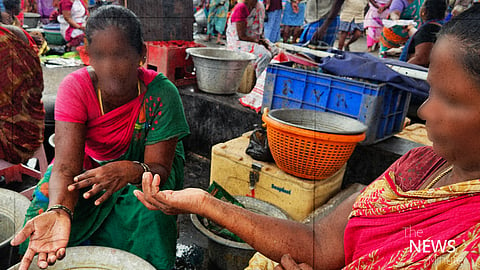
Every day, 39-year-old Selvi sits by the roadside on Nungambakkam to sell flowers. An umbrella makes a feeble attempt to shield her from Chennai’s scorching sun. The heat is unbearable, and so are the headaches she gets during the summers.
But staying hydrated is not an option for her. “I don’t drink much water to avoid having to use the toilet,” she said. There are no toilets near the spot where she sells flowers.
“Even if I take a short break to use the toilet, my flowers get stolen. It has happened a couple of times,” she explained. She finally drinks water only after reaching her home in the Washermanpet slum late in the evening.
The day inevitably takes a toll on her. “By evening, my whole body hurts. I get unbearable headaches on summer days, but I don’t have them when it rains. I have also had vaginal infections a couple of times,” she said.
For poor women in parts of urban and coastal Chennai, the summer arrives with a number of health issues. The intensity of the heat they experience at work – selling flowers, fish, fresh produce, or doing domestic labour – does not come down at home, where they have to spend hours at the stove in cramped kitchens, and go to sleep under tin roofs that trap the heat indoors. Many of them also have to face increased instances of domestic violence, as The News Minute previously reported.
Also Read: Heat, lost income, and violence: How Chennai women are bearing the cost of a hotter city
But, as Selvi said, to merely survive they have to endure the heat and all the troubles that come with it.
The News Minute spoke to 35 women aged between 30 and 60 from slum and coastal settlements across Chennai, including Pulianthope, Kodungaiyur, Nochikuppam, and Kasimedu. Thirty of them said they experience increased health problems during summer.
Six of the women had undergone hysterectomies and said the intensity of the hot flashes they experience during summer is difficult to describe. At least 28 women reported severe pain in their hands and legs when the temperature rose, while all 30 women who reported summer-related health problems said they struggle with sleep during periods of intense heat.
All 35 women interviewed work outside the home in some form of informal or unorganised-sector employment, while also shouldering domestic responsibilities. They said they typically spend more than 14 hours a day working, between paid work outside the home and unpaid domestic work such as cooking, cleaning, fetching water, and caring for their families.
The News Minute also spoke to experts and researchers who said that summers see an economic slowdown, which further deepens existing inequalities suffered by women. Nutrition and sleep take a backseat, and menstrual health deteriorates. But with climate policy remaining largely gender-blind, the women’s concerns remain unknown and unaddressed.

At a Community Health Centre near the Washermanpet slum, the summer sees a surge in women coming in with complaints of body pain, urinary tract infections (UTIs), and skin infections, said a government doctor who works there. “Most of the patients who come here are women,” she added.
Reiterating Selvi’s point, the doctor said that women working in open, informal workplaces such as fish, fruit, and vegetable markets often avoid drinking water because access to toilets is limited. “A fish vendor cannot simply leave her stall and walk away, and the same is true for women selling flowers on the roadside. This makes them particularly vulnerable to the effects of heat,” the doctor said, speaking on the condition of anonymity..
She also pointed to the wider effects of heat on women’s reproductive and hormonal health, saying that extreme temperatures can affect sleep and nutrition, which in turn can worsen existing health problems.
“At least 200 outpatient tickets are issued here every day, of which at least 160 are for women,” said the administrator of a government hospital near the Pulianthope slum.
Another Community Health Centre near Royapettah also reported that women make up the majority of patients seeking treatment for heat-related complaints.
Experts point out that women’s greater vulnerability to heat is not simply a result of physiological or biological differences, but is largely shaped by the conditions in which they live, work, and carry out their daily responsibilities.
Women from low-income households are among those most severely affected by extreme heat, the experts point out, owing to inadequate housing, limited access to cooling solutions, poorly protected work environments, and nutritional deprivation.
“Women experience heat differently, particularly in low-income communities. It comes down to where and how women spend their time. In informal settlements, homes built with tin or asbestos roofing can trap heat to the point where indoor temperatures reach as high as 47°C,” said Divyanshi Vyas, senior associate at the Indian Institute of Human Settlements. Women often spend long hours doing home-based work inside these spaces, she added.
Investing in basic cooling is out of reach for them, she said, because “women in informal work often earn very little and are excluded from land or asset ownership.”
“Social norms compound this further: women are often restricted from using shaded public spaces or cooling facilities that men can access more freely. So they end up absorbing heat indoors instead,” Divyanshi added.
According to her, women face the “triple burden” of unpaid domestic work, income-generating work, and maintaining community-level relationships. This leaves them with little time to rest and recover from heat exposure.
Mohan Kumar, the director of Health and Nutrition at the MS Swaminathan Research Foundation (MSSRF), concurred.
“Women are impacted more than men when it comes to extreme climatic conditions. They get more exposed to heat, both from the direct sun and the kitchen. The amount of work they do is also more, as they bear the burden of housework too,” he said.
A 2025 study by MSSRF examined how extreme heat affects women’s physical, mental, and reproductive health, as well as their access to healthcare. It combined National Family Health Survey-5 (2019–21) data from seven heat-prone states with surveys of more than 3,300 women, focus group discussions, interviews with frontline health workers, and consultations with over 60 experts.
The study found that 70% of women reported physical health symptoms such as fatigue, dizziness, dehydration, and gastrointestinal problems during peak summer, with reproductive health problems including urinary tract infections, irregular bleeding, and menstrual disruptions also widely reported.
The economic impact of extreme heat can further deepen these vulnerabilities.
“In summer, there is a slowdown in the economy. People who are engaged in daily-wage activities see their earnings plunge, as they may not be able to go to work every day. When the economy slows down, it directly impacts household finances and the spending power of women,” Mohan Kumar explained.
Nearly all respondents (97%) in MSSRF’s 2025 study had reported losing more than Rs 1,500 in wages in the three months from April to June, highlighting how heat compounds both health and economic vulnerabilities.
This can also deepen existing nutritional inequalities within households. “For example, in a family that lives on daily wages or a low income, a woman may cook for her husband, two children, and mother-in-law, but she would be the last to eat. By the time everyone else has eaten, the good parts of the meal are gone,” Mohan Kumar said.
To illustrate the nutritional inequality women face, he cited an example the researchers of MSSRF have encountered during fieldwork: A woman who cooks an egg curry when only two eggs are available, would save it for her husband and children. “She would eat just rice and the leftover gravy, with no nutrition. This causes heavy deprivation of nutrition, a physiological impact that summer has on women,” he said.
In the summer, sleep is a rare luxury for 37-year-old Shanthi, another flower seller who lives in Washermanpet. The heat trapped inside her one-room, tin-roofed house wakes her up at night. She gets up, takes a bath, and tries to sleep again. Sometimes, she simply lies awake, staring at the roof till dawn breaks.
Shanthi’s day begins at 4 am. She draws a kolam (a pattern drawn with rice flour at the entrance of homes) outside her one-room home before getting breakfast and lunch ready for her two school-going daughters, aged 11 and eight. By 5.30 am, she is on her way to the Koyambedu flower market, where she has to arrive early to get fresh flowers at wholesale prices.
She picks up fresh marigolds, jasmine, and roses, and takes a bus to Ashok Nagar, where she sells it throughout the day on a roadside. By evening, she heads back home to a settlement near Washermanpet, picking up her children along the way, who wait at their grandmother’s house.
“Without even changing my clothes, I start cooking dinner for my children. Then I clean the house, fetch water from a nearby pipe and wash clothes. By then, it is already night,” she said.
“My husband sometimes sleeps outside, in the lane, on a mat. I can’t do that. So it is sleepless nights for me. It is more than 15 hours of work, non-stop,” she said, smiling.
Her hands and legs ache unbearably as temperatures rise. She also experiences skin rashes and hot flashes.
“Some nights, I just wake up and cry. There is a heat in my lower abdomen. It feels like there is a fire inside my head. The next day, I go to the doctor at the nearby health centre. They give me medicines for the pain in my limbs. I take them, and then life goes on,” she said, before picking up her baskets and walking towards the next bus.
Mani, 50, sells dry fish near Kasimedu. Having undergone a hysterectomy (surgical removal of the uterus), she said the summer has become a nightmare.
“Hysterectomy rates were found to be significantly higher in districts with greater heat vulnerability,” the 2025 MSSRF study cited earlier found. “In the most vulnerable districts, the prevalence of hysterectomy more than doubled among the poorest women, from 11.9% in very low heat vulnerability index (HVI) districts to 25% in very high HVI districts.”
“During the three or four months that summer lasts, I have no idea what happens inside me. I get red rashes all over my body, not just on the parts exposed to the sun,” Mani said. She lifted her saree slightly to show the rashes on her thighs, saying that no medicine seems to make them go away until the rains arrive. “When the weather is cool or it rains, the rashes magically disappear,” she said.
It is not just the rashes, she said. “I also get severe headaches. A few times, I went to Stanley (Stanley Medical College Hospital) and got myself checked. I even underwent scans, but nothing was resolved. When it rains, I don’t get these headaches,” she said.
Tamilarasi*, who sat next to Mani, is 52 and her periods are irregular, which gives her hot flashes as well as physical pain. “I met a doctor in a private hospital nearby, where she said I am going through menopause. It is unbearable for me, the heat inside the house especially. So I take the stove outside and cook on the roadside sometimes. All other work, like chopping vegetables, is done outside,” she said.
Heat also takes a significant psychosocial toll on women. Among the women surveyed as part of the MSSRF study, 41% reported increased irritability, 33% heightened anxiety or stress, and 32% sleep disruption during periods of extreme heat. Around 24% of women experiencing heat-related symptoms did not seek any medical care.
The study also found that poverty, housing conditions and basic infrastructure significantly shape women’s vulnerability to heat. Women in the poorest wealth group reported higher health impacts than those in the richest group, with 75% reporting general physical health problems compared with 67% among the richest, and 65% reporting reproductive health impacts compared with 38% among the richest.
Access to cooling also mattered: only 30% of women with a refrigerator reported gastrointestinal and other heat-sensitive symptoms, compared with 52% among those without one. The burden of inadequate water access was also pronounced, with 62% of women who spent around two hours collecting water reporting signs of dehydration, while 77% of those with extended water-collection responsibilities reported mental health concerns.
The growing health risks are also being reported by healthcare professionals globally. A survey commissioned by the London-based charitable foundation Wellcome Trust that looked at 1,000 maternal healthcare professionals across India, Australia, Brazil, the United Kingdom, and Zimbabwe found that 73% had seen an increase in heat-related cases or complications among pregnant women between 2021 and 2026, while 76% reported an increase affecting foetal or newborn health.
Nearly all respondents had cared for a pregnant woman (98%) or baby (99%) whose health they believed had been affected by extreme heat. About 23% had seen pregnancy complications requiring additional monitoring or treatment, while 34% reported low birth weight or restricted growth, and 36% reported dehydration or heat-related illness among newborns.
The findings underline that the health impacts of extreme heat are not limited to discomfort, but can affect maternal and newborn health and access to care.
“Women with PMOS (Polyendocrine Metabolic Ovarian Syndrome) or hormonal conditions such as thyroid disorders, and those going through perimenopause and menopause, experience extreme weather conditions differently. But we don’t have enough locally based studies on it, and there are no policies looking beyond the basic factors,” says Devika R, a Kerala-based clinical psychologist.
“When women come to us with mental health issues, hot flashes, and other symptoms, there should also be a framework to examine their links with climate and extreme weather,” she added.
Chennai’s heat action plan (HAP) do not adequately address gendered vulnerabilities, said Divyanshi of the Indian Institute of Human Settlements.
“Most HAPs treat ‘women’ as a single, homogeneous vulnerable category, without engaging with how heat vulnerability actually intersects with caste, class, livelihood, land tenure, or age,” she said.
She also pointed to what she calls the “feminisation of responsibility”, where women’s unpaid labour is increasingly relied upon in community-level heat and disaster response without giving them decision-making power or compensation.
The link between extreme heat and gender-based violence is also largely absent from policy frameworks. Divyanshi said this is partly because climate and public health policies have inherited a “zero deaths” framing from disaster management, which prioritises measurable, acute outcomes such as heat-related deaths and illness. “Domestic violence and psychological erosion don’t fit that framing because they happen gradually and privately, so they simply don’t show up in the metrics these plans are designed around,” she said.
A gender-responsive heat strategy, she argued, must therefore go beyond physical risk reduction and address the social and economic conditions that shape women’s exposure to heat.
India’s climate planning has historically been shaped by environmental management, infrastructure, disaster response, and engineering solutions, with health and social dimensions entering the discussion much later, recalled Supriya Sahu, Additional Chief Secretary and Commissioner of the Entrepreneurship Development and Innovation Institute. A former secretary for the Environment, Climate Change and Forests Department of the Tamil Nadu government, Supriya said this institutional history surrounding climate planning continues to shape who participates in it and what gets measured.
Issues such as menstrual health, unpaid care work, domestic safety, and household economic stress often fall between departmental boundaries, she said, adding, “Unless climate, health, labour, social welfare, water, housing, and disaster management agencies plan together from the beginning, these issues remain structurally outside the frame.”
Conventional vulnerability assessments, she said, may identify a neighbourhood as heat-exposed without capturing the gendered consequences of that exposure. “A woman may be unable to work because of illness, water scarcity may increase her unpaid labour, or she may lack a safe and private space to manage menstruation during displacement,” she said.
Addressing these gaps requires a whole of government approach, “with joint planning, budgeting and monitoring, supported by direct consultation with affected women,” she said.
Stressing that evidence generation is equally important, Supriya said, “What is not measured is difficult to fund, target, or evaluate.”
According to her, Tamil Nadu’s One Health and Climate Hub is an institutional platform that could help bridge some of these gaps by connecting climate and health data and supporting research through government hospitals, medical colleges, primary health centres, universities, and community organisations. She said such research should also inform future revisions of the State Action Plan on Climate Change and the State Action Plan on Climate Change and Human Health.
She also cautioned against measuring the impact of heat only through hospital admissions. “A woman who misses several days of work because of dehydration, fatigue or dizziness may never visit a hospital. Her illness and loss of income will therefore remain invisible in formal records,” Supriya said, adding, “Community-based and longitudinal research is essential for capturing these less visible impacts.”
*Name changed to protect identity.
This story was produced with support from the Earth Journalism Network (EJN) Fellowship on Non-Economic Loss and Damage Due to Climate Impacts Along the Bay of Bengal Coast.
Follow TNM's WhatsApp channel for news updates and story links.