
Subscribe
Follow TNM’s WhatsApp channel for news updates and story links.
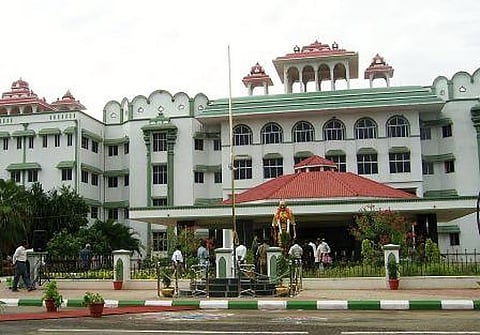
The Madurai bench of the Madras High Court on Monday, August 31, directed authorities to investigate allegations of prisoners from marginalised communities being forced to clean toilets and carry out manual scavenging work in prisons in Madurai, Trichy and Tirunelveli districts.
A division bench of Justices CV Karthikeyan and R Sakthivel passed the directions while hearing a Public Interest Litigation (PIL) filed by Madurai-based advocate KR Raja.
Raja alleged that prisoners belonging to marginalised communities were being assigned sanitation work, including toilet cleaning and manual scavenging, at the Madurai Central Prison.
He alleged that similar practices existed at the Palayamkottai Central Prison in Tirunelveli district and the Trichy Central Prison.
According to the petitioner, certain blocks and barracks in the Madurai and Palayamkottai prisons had allegedly been demarcated for prisoners from marginalised communities.
The prisoners in those blocks were allegedly made to clean around 150 toilets, both inside cells and outside barracks. The petitioner claimed that only two sanitary workers had been appointed for the entire prison despite overcrowding.
Raja also alleged that similar practices were being followed at the Special Prison for Women in Trichy.
According to him, some women prisoners had been permitted to work at the Freedom Petrol Bunk operated by the prison authorities as part of rehabilitation measures.
However, the petitioner claimed that instead of working at the petrol bunk, they were made to clean toilets and other sanitary areas on the premises.
The petitioner also disputed the prison authorities’ claim that municipal services alone were engaged to clean toilets.
Raja, the co-founder of Global Network for Equality, India, an organisation that supports the education of children of inmates and crime victims, said he had made representations to prison authorities in 2025 seeking an end to caste discrimination and legal action against officials responsible for such practices.
He also sought preservation of CCTV footage from January 16, claiming that it would help establish whether prisoners had been made to clean toilets and drainage systems.
Referring to the Supreme Court's 2024 judgement in Sukanya Shantha vs Union of India, which dealt with caste discrimination in prisons, and the prohibition of Employment as Manual Scavengers and Their Rehabilitation Act, 2013, the petitioner argued that such practices were discriminatory and violated the dignity of prisoners.
The petitioner had alleged that conditions in several district prisons in southern Tamil Nadu were even worse and sought directions to prevent caste discrimination, manual scavenging and the assignment of toilet-cleaning work to prisoners from marginalised communities.
However, the prison authorities denied that such practices existed.
After hearing the petition, the High Court directed the Principal District Judges and the District Legal Services Authority (DLSA) secretaries of Madurai, Trichy and Tirunelveli to inspect the respective prisons and verify the allegations.
The DSLAs were also directed to inquire the prisoners, examine CCTV footage and submit status reports to the court. The superintendents of the respective prisons were separately directed to file reports on the allegations.
The matter has been posted for further hearing on October 4.
