
Subscribe
Follow TNM's WhatsApp channel for news updates and story links.
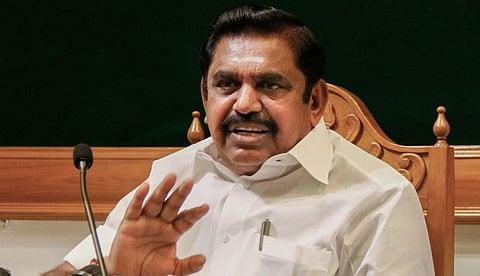
The rebellion within the All India Anna Dravida Munnetra Kazhagam (AIADMK) following the trust vote in the Tamil Nadu Assembly has brought the anti-defection law back into national focus, with the rival factions of the party preparing for a prolonged legal and political confrontation over the fate of 25 MLAs who voted in favour of Chief Minister C Joseph Vijay’s Tamilaga Vettri Kazhagam (TVK) government.
The TVK government survived the confidence motion with 144 votes in the Assembly on May 13. While AIADMK general secretary and former Chief Minister Edappadi K Palaniswami and 22 MLAs voted against the motion, 25 legislators aligned with former Ministers SP Velumani and C Ve Shanmugam backed the government, exposing a sharp vertical split within the principal Opposition party.
Hours later, Palaniswami escalated the internal battle by removing 26 rebel district secretaries, including 12 legislators, from their organisational posts.
The political developments have now triggered questions over how the anti-defection law under the Tenth Schedule of the Constitution will operate in this case.
What does the anti-defection law provide?
The Tenth Schedule and the Members of the Tamil Nadu Legislative Assembly (Disqualification on Ground of Defection) Rules, 1986, provide two principal grounds for disqualification.
The first is when a legislator “voluntarily gives up membership” of the political party on whose ticket the member was elected.
The second is when a member votes or abstains from voting contrary to the direction or whip issued by the political party.
The AIADMK dispute potentially engages both provisions.
The immediate controversy stems from the trust vote, where the rebel legislators voted in favour of the TVK government despite the Palaniswami faction directing all AIADMK MLAs to oppose the motion.
However, legal experts have also pointed to the conduct of the dissident MLAs before the trust vote, including their public statements supporting the TVK government and opposing the AIADMK leadership, as factors that could attract the “voluntarily giving up membership” clause.
Why is the whip central to the case?
The validity of the party whip is one of the central legal questions in any disqualification proceedings.
A whip is an authorised member of a political party in the legislature who issues official directions to legislators on how to vote during proceedings in the House, especially during confidence motions, money bills, and key legislation.
Palaniswami has maintained that he, as AIADMK general secretary, had formally appointed former Minister SS Krishnamurthy as the whip of the legislature party and that directions to oppose the confidence motion were communicated to legislators through e-mail, registered post, and SMS.
Palaniswami has also claimed that the AIADMK legislature party had already been constituted with him as its leader and that written consent from legislators had been obtained.
The rebel faction, however, has rejected this version. Shanmugam said that no valid election of the legislature party leader had taken place and demanded that the resolutions appointing the legislature party leader and whip be made public.
This disagreement is legally significant because anti-defection proceedings based on violation of a whip depend on whether the whip itself was validly issued and properly communicated to members.
Rule 2(f) of the Tamil Nadu Legislative Assembly (Disqualification on Ground of Defection) Rules, 1986, defines the legislature party leader as the person appointed by the political party and communicated to the Assembly Secretary under prescribed procedures.
Further, only the political party — and not a faction within the legislature party — can authorise MLAs to communicate with the Speaker.
Why is the Supreme Court’s Shiv Sena judgement important?
Much of the legal debate in Tamil Nadu is now centred on the Supreme Court’s 2023 Constitution Bench ruling in Subhash Desai vs Principal Secretary to the Governor of Maharashtra, which emerged from the Shiv Sena split in Maharashtra.
The case arose from the 2022 political crisis in Maharashtra after a faction led by Eknath Shinde rebelled against the Uddhav Thackeray-led Shiv Sena, leading to disputes over the validity of rival whips, the recognition of the “real” political party, and disqualification proceedings under the anti-defection law.
In its May 2023 judgement, the Constitution Bench held that the “political party, and not the legislature party, appoints the Whip and the Leader in the House.” The Court also ruled that the Speaker cannot recognise a faction as the “real” political party merely on the basis of numerical strength within the legislature party and must instead examine the structure and constitution of the original political party.
The judgement effectively weakened the argument that a numerically stronger faction inside a legislature party could independently appoint its own whip or legislature party leader.
“The percentage of members in each faction is irrelevant to the determination of whether a defence to disqualification is made out,” the Constitution Bench said.
The Court also held that the Speaker must examine the structure and constitution of the original political party while deciding such disputes and not rely solely on legislative strength.
This principle may become crucial in Tamil Nadu because the Palaniswami faction continues to control the AIADMK’s organisational structure, while the rebel faction appears to command a larger number of MLAs inside the Assembly.
Can the rebels use the “merger” exception?
One of the major political claims emerging from the rebellion is whether the dissident MLAs can avoid disqualification if they secure the support of two-thirds of AIADMK legislators.
However, the “merger” exception under Paragraph 4 of the Tenth Schedule may not protect the rebels unless the original political party itself merges with another party.
Paragraph 4 requires two conditions to be satisfied simultaneously:
the merger of the original political party with another political party; and
approval of the merger by not less than two-thirds of the legislature party
The “political party” and the “legislature party” are distinct entities under the Constitution.
Further, legislators cannot “manufacture a merger by sheer numerical strength in the House” without an actual merger of the parent political organisation.
At present, there has been no merger between the AIADMK and the TVK. This means that even if the rebel faction commands a majority within the AIADMK legislature party, it may still remain vulnerable to disqualification proceedings.
What powers does the Speaker have now?
If Palaniswami files petitions seeking the disqualification of the rebel legislators, Speaker JCD Prabhakar will have to initiate proceedings under the Tenth Schedule. Notices may be issued to the legislators concerned, asking them to explain their position within a stipulated period.
The Speaker may either decide the matter directly or refer it to a committee before taking a final decision.
However, the Speaker may also have to first determine whether the AIADMK legislature party had been validly constituted and whether the whip relied upon by the Palaniswami camp was properly authorised and communicated.
The Speaker’s decision is likely to be challenged in court irrespective of the outcome.
Meanwhile, the larger battle over the control of the AIADMK and its ‘two leaves’ symbol could eventually reach the Election Commission as rival factions seek recognition as the “real” AIADMK.
The Supreme Court in the Shiv Sena judgement had clarified that the Speaker’s determination under the Tenth Schedule would only be a prima facie finding and would not bind the Election Commission while deciding disputes relating to party symbols and organisational control.
Political consequences beyond the courtroom
The legal uncertainty also presents a political dilemma for Palaniswami.
If he aggressively pursues disqualification proceedings and succeeds, the resulting bye-elections could further weaken the AIADMK at a time when the party is already facing internal instability.
At the same time, inaction could strengthen the rebel faction within the organisation and deepen challenges to his authority as party general secretary.
For the rebel MLAs, the immediate challenge lies in avoiding disqualification while simultaneously attempting to establish political legitimacy within the AIADMK structure.
The dispute is therefore likely to evolve simultaneously on three fronts — before the Speaker under the anti-defection law, before constitutional courts through judicial review, and potentially before the Election Commission in a battle over the control of the AIADMK organisation and symbol.
Follow TNM's WhatsApp channel for news updates and story links.
