
Subscribe
The Dravida Munnetra Kazhagam (DMK) has decided to support the Union government’s proposed Delimitation Bill in Parliament. The party passed the resolution at a meeting of its Members of Parliament chaired by DMK president MK Stalin. The party has 22 MPs in the Lok Sabha and eight in the Rajya Sabha.
The draft Bill, released by the Union government on Friday, November 27, addresses most of the key demands raised by the DMK. It proposes a 50% increase in the number of Lok Sabha seats allocated to every state, delimitation of constituencies based on the latest Census, and a freeze on further delimitation until 2051.
The Bill is scheduled to be tabled in the Lok Sabha on November 30, during a special sitting of Parliament.
The proposed changes come amid sustained opposition from several southern states, which have argued that delimitation based on population could penalise states that have successfully implemented family-planning measures and brought down population growth. Their concern has been that states with higher population growth could gain a greater share of parliamentary seats, reducing the relative political influence of southern states.
The proposed legislation is also linked to the implementation of the 33% reservation for women in the Lok Sabha and state Legislative Assemblies. It seeks to increase the maximum strength of the Lok Sabha from 550 to 850, with the number of elected representatives from states going up from 530 to 815. The number of seats in state Assemblies will also increase by 50%.
Under the proposed arrangement, the existing proportion of Lok Sabha seats allocated to each state will be protected until 2051.
The DMK had strongly opposed the previous Constitution Amendment Bill introduced by the Union government in April 2026. The party argued that linking delimitation to population growth would disadvantage states that had invested in family planning and successfully reduced their population growth.
The party's opposition was part of a wider debate over the political representation of southern states. These states have argued that they should not lose their share of parliamentary representation for achieving demographic targets encouraged by successive Union governments.
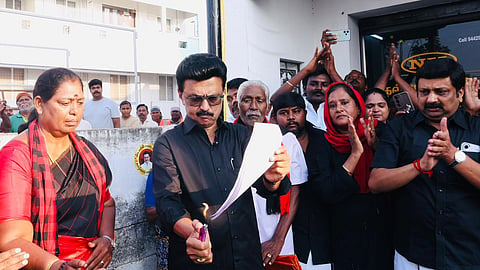
Stalin had taken a strong public position against the earlier proposal and even burnt a copy of the Bill in protest. The April legislation failed to secure the two-thirds majority required for a constitutional amendment in the Lok Sabha.
In the months that followed, the DMK indicated that it was not opposed to increasing the number of parliamentary seats as such but wanted a legal guarantee that Tamil Nadu's existing share of representation would not be reduced. The party also sought an extension of the freeze on the proportion of seats allocated to different states for another 25 years.
Follow TNM's WhatsApp channel for news updates and story links.
