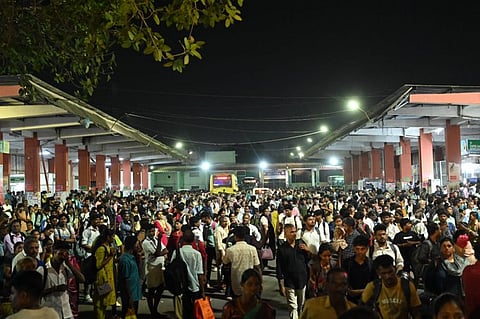

Severe transport disruptions on the eve of polling in Tamil Nadu left thousands of voters stranded across cities, particularly in Chennai and Coimbatore, raising concerns over access to polling booths as the state voted in a single phase on April 23. Long delays, overcrowded buses and a shortage of services triggered protests at major bus terminals, even as many struggled to reach their hometowns in time to cast their votes.
The issue began on the night of April 22 when large numbers of people attempted to travel from urban cities to their native districts. In Chennai, key transport hubs such as Kilambakkam, Koyambedu and Madhavaram saw chaotic scenes, with passengers waiting for hours amid complaints that the number of special buses deployed was insufficient. The State Transport Corporation had announced around 2,000 additional services from Chennai, but commuters said these fell short of demand.
Traffic congestion compounded the situation, with several travellers reporting that it took over five hours to cover distances of around 35 kilometres. Many who boarded buses late on Wednesday, April 22, night said they were still on the road by Thursday morning, having only reached towns such as Tindivanam or Villupuram. Journeys that would typically take a few hours stretched overnight, with vehicles moving slowly through gridlocked roads near Tambaram and beyond.
Similar scenes unfolded in Coimbatore, where hundreds gathered at the Singanallur bus terminus. Frustration mounted after prolonged waiting times, leading to a road blockade on Trichy Road late on Wednesday night. Passengers heading to southern districts including Madurai, Theni and Tirunelveli said they were unable to secure transport, with many alleging that the arrangements did not match the scale seen during peak festival travel periods such as Deepavali or Pongal.
Commuters described overcrowded buses, with some forced to stand on footboards, while others waited from early morning into the night to find a seat. The surge in demand also led to complaints against private omni bus operators, with passengers alleging inflated fares.
The transport disruptions came despite significant logistical preparations for polling. Tamil Nadu, which has around 5.73 crore registered voters, is voting across 234 Assembly constituencies, with over 75,000 polling stations set up. Authorities have deployed around 1.4 lakh police personnel along with paramilitary forces, and introduced measures such as displaying candidates’ photographs on electronic voting machines for the first time.
However, the scale of voter movement, particularly from cities like Chennai and Coimbatore, appeared to have outpaced planning. Official figures indicated that nearly 1.89 lakh people had already travelled from Chennai using special bus services by April 21, with over 10,000 buses operating across the state. Even so, many passengers said services on key southern routes remained inadequate.
The disruptions prompted protests in several locations. At Kilambakkam in Chennai, travellers staged demonstrations inside the bus terminus, while in Poonamallee, residents blocked roads citing a lack of buses to nearby districts. In Tiruvallur, District Collector Prathap was surrounded by aggrieved commuters during an inspection, as they demanded immediate intervention.
Amid the chaos, actor and Tamilaga Vettri Kazhagam (TVK) chief, Vijay, wrote to the Election Commission of India (ECI) seeking urgent measures to address the situation. In his letter, he described the transport breakdown as a serious threat to voters’ rights and called for immediate deployment of emergency public transport services.
He also flagged reports of long queues and delays at polling stations, calling for the appointment of supervisory officers to monitor the voting process and ensure that it proceeds efficiently. In addition, he requested that polling hours be extended by two hours, until 8 pm, to accommodate those delayed by transport disruptions and long waiting times.
