
Subscribe
The 6th National Family Health Survey NFHS fact sheets, when finally released on Friday, May 29, display some ‘Houdini tricks’. A set of crucial data on cooking fuel, sanitation, anaemia, quality of planning services, knowledge about HIV, and several population and household indicators are missing in the latest fact sheet.
While the NFHS-5 fact sheet had 131 key indicators, it has dropped to 101 in the latest document, with crucial data on anaemia, sex ratio at birth, infant and child mortality, and quality of family planning services missing. It is unclear whether some of these indicators were omitted in the fact sheets but would be included in the detailed national report that is normally published within a couple of months after release of the fact sheet.
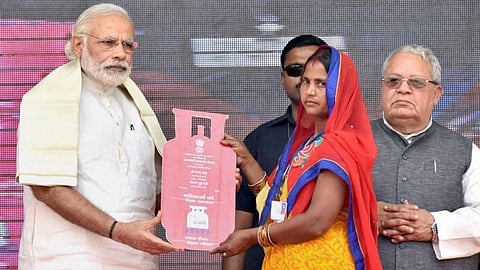
One of the key indicators missing is the ‘percentage of households using clean fuel for cooking’ which was available in the previous NFHS reports and fact sheets. While NFHS-4 (2015-2016) had shown use of clean cooking fuel in 43.8% of households, the next survey (NFHS-5) showed that it increased to 58.6% in 2019-21, nearly a 15% increase. However, latest data is unavailable to compare it with the impact of the crores of additional connections under the Pradhan Mantri Ujjwala Yojana (PMUY), a pet scheme promoted by the Prime Minister himself.
Another missing indicator, linked to the BJP government’s popular Swachh Bharat Abhiyan scheme, is the data on sanitation.
The Union government in 2019 celebrated the construction of over 100 million individual household toilets and declared the country Open Defecation Free (ODF). Poking loopholes in the claim, NFHS-5 (2019-21), showed that only around 70.2% of the population used an improved sanitation facility. Though this was an increase from the previous NFHS data of 48.5%, it raised questions on the ODF status.
The NHFS-6, however, has introduced some new topics, such as Direct Bank Transfer, Self-Help Group (SHG) coverage, digital literacy and financial transactions, etc.
Since its first survey in 1992-93, the NFHS has been providing crucial data on health and family welfare such as fertility rates, anaemia, infant mortality, sanitation, nutrition, etc. The International Institute for Population Sciences (IIPS) in Mumbai, assigned by the Ministry of Health and Family Welfare, is in charge of the coordination and technical guidance for the survey. The previous NFHS was released by the end of 2020 and its phase-II findings was published in November 2021.
Mortality rates
The infant and child mortality rates and sex ratio at birth, major indicators of fertility and population growth, too are missing in the latest NFHS fact sheet. However, three days ahead of the fact sheet’s release, the government published a special bulletin of the latest Sample Registration System (SRS), which included infant mortality rates (IMR) along with birth and death rates in the country.
As per the SRS, the national IMR is 24 for the year 2024 (24 infant deaths per 1,000 live births). The SRS said there has been a 38% decline in IMR in the last decade. The SRS is conducted by the Office of Registrar General and Census Commissioner under the Ministry of Home Affairs headed by Union Minister Amit Shah.
Other parameters such as quality of family planning services are missing in the SRS.
Though some of the missing data may be included in reports published by the Officer of Registrar General, like SRS and the vital statistics report, researchers and policymakers usually rely on the detailed NFHS reports for comprehensive socio-economic indicators related to fertility and mortality rates.
The anaemia saga
Missing data on anaemia was not a surprise as the IIPS had dropped the questionnaire connected with it at the launch of the survey in 2023 after the previous NFHS data came under intense scrutiny.
As per NFHS-5, the prevalence of anaemia was high (67.1) among children and pregnant women (52.2), despite targeted initiatives such as Anaemia Mukt Bharat under the National Health Mission since 2018. This was followed by allegations that the survey was faulty. Dr Shamika Ravi, economist and a member of the Economic Advisory Council to the Prime Minister, had then written an op-ed claiming that the data collection for the NFHS was flawed.
After dropping questions related to anaemia from the NFHS in 2023, it was announced that the condition would be separately surveyed as part of the Diet and Biomarkers Survey in India. The previous NFHS had a list of seven indicators for assessment of anaemia among children and adults, none of which are included in NFHS-6.
In 2023, NFHS and IIPS came under the scanner of an intense political debate over the suspension of the then IIPS director KS James in the name of irregularities in recruitment. As per reports, prior to the suspension, James was asked by the government to resign after it was not happy with certain data sets that came up in the NFHS survey, especially related to anaemia, sanitation, and cooking fuel. James later resigned from IIPS, weeks after the government revoked his suspension.
Data trouble
In the past too, the Union government has faced allegations over its intervention with data. One of the major criticisms is over the undue delay in carrying out the population census, originally planned in 2021. GDP is another factor that comes under scrutiny with even former Chief Economic Advisor Arvind Subramanian alleging that the official figures since 2011 had been overestimated.
In 2019, PC Mohanan, who was the acting chairman of the National Statistical Commission, which oversees core statistical activities, resigned over the delay in the release of employment statistics, which was apparently withheld due to general elections. Another NSC member J Meenakshi too quit along with him.
Mails sent to the Ministry of Health and the IIPS director remain unanswered.
Follow TNM's WhatsApp channel for news updates and story links.
