
Subscribe
Follow TNM's WhatsApp channel for news updates and story links.
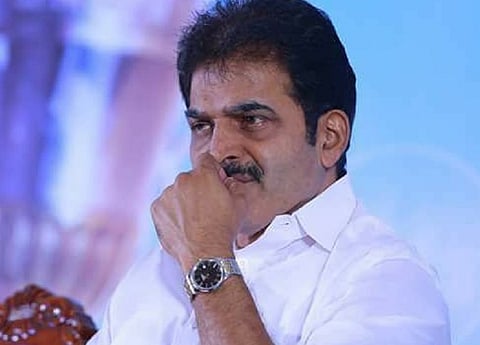
With the Congress-led United Democratic Front's sweeping victory in the 2026 Kerala Assembly election, the party's attention has turned to the question of who leads the state. Discussions over the Chief Minister's post are now firmly underway within the Congress, and according to sources, Alappuzha MP and AICC General Secretary KC Venugopal has made a strong pitch for the role, pointing to his role in engineering the win.
Venugopal's arguments include his intervention in bringing dissident CPI(M) leaders on board, a factor widely credited with denting the Left's vote in key constituencies. He has also signalled that the Chief Minister will not be decided by media speculation or individual ambition, but through a considered evaluation of leadership qualities, administrative experience, and the views of Congress MLAs and the party high command.
Three names have emerged at the centre of the conversation: senior leader Ramesh Chennithala, 2021 Leader of the Opposition VD Satheesan, and Venugopal himself.
Central to Venugopal's pitch is his claim that he took the initiative to field dissident CPI(M) leaders – G Sudhakaran from Ambalapuzha, V Kunhikrishnan from Payyannur, and TK Govindan from Taliparamba – as candidates with UDF support. All three won their seats. Their candidacies, he argues, helped the UDF consolidate CPI(M) votes across several constituencies, and the credit for brokering that arrangement belongs to him.
Venugopal has also pushed back firmly against the media narrative building around individual Chief Minister candidates. His argument is that no leader was projected as Chief Minister candidate by the UDF. The mandate, therefore, cannot be retroactively claimed by any one person.
The right to choose the Chief Minister, he insists, rests with the Congress MLAs and the AICC and should not be done under public pressure or media reports of preference.
Venugopal argues that the post demands more than electoral appeal. Administrative experience, organisational skill, social engineering ability, and the capacity to hold together both the party and the alliance will all weigh in the reckoning. All three contenders, he acknowledges, have proven themselves in their respective domains and therefore no one-sided decision of the kind the media is projecting is either possible or appropriate.
He has also made pointed reference to the AICC's own role in the victory – the appointment of observers across constituencies, active intervention in resolving local disputes, and resource mobilisation – arguing that the high command worked harder than anyone else in this election. And, in what reads as a barely veiled message to rivals, he notes that the high command cannot be moved by pressure tactics. As evidence, he points to its success in blocking K Sudhakaran's ambitions to contest in the Assembly polls.
Follow TNM's WhatsApp channel for news updates and story links.
