
Subscribe
Azim Premji University (APU) has suspended a student for two years in connection with the Akhila Bharatiya Vidyarthi Parishad’s (ABVP) vandalism of the campus that occurred in February this year. The student, the university believes, was one of the organisers behind a discussion on Kashmir over which the ABVP vandalised the APU campus on the outskirts of Bengaluru. The suspension order has also accused the student of not helping to de-escalate the volatile situation.
The suspension has sparked outrage among students who feel that the university’s actions are excessive and are demanding the revocation of the suspension.
The APU Registrar’s office sent an email on Friday, May 8, which TNM has seen, to a student of the MA Development programme stating that the Special Disciplinary Committee had decided to suspend the student with immediate effect for two years.
“The committee has arrived at these recommendations in view of your persistent defiance of institutional processes and guidelines, misrepresenting facts, violating the University code of conduct and failure to follow University’s instructions for de-escalating a volatile situation during an extraordinary event on campus,” the email said, but did not mention the event directly nor the instructions the student had failed to comply with.
During the period of suspension, the student would not be permitted to enter the campus, attend classes, access any campus facilities, or participate in any academic, alumni or extracurricular activities of the University, the email said.
At the end of the suspension period, the student’s readmission would be subject to review and compliance with conditions set by the university, the email said.
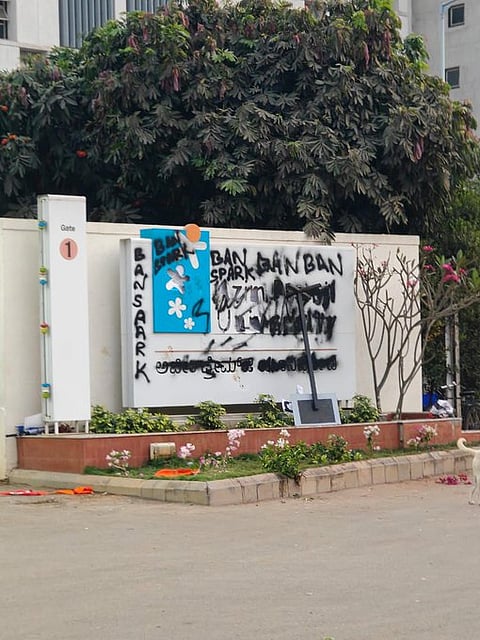
The suspension comes two months after a group of ABVP members from colleges in Bengaluru entered the APU campus located on the outskirts of the city and created a ruckus claiming that the university was hosting an ‘anti-national’ event. The ABVP is the student wing of the Rashtriya Swayamsevak Sangh (RSS).
A group of students from Spark Reading Circle APU had organised a discussion on the alleged mass rape of Kashmiri women in Kunan and Poshpora villages in Kupwara district by Indian armed forces on February 23, 1991. At the time, college authorities had filed a complaint with the police against the Spark Reading Circle APU Instagram account, which announced the event. The university had said that no such event had been permitted on campus and accused the Instagram account of defaming the university and creating enmity between groups by organising the event.
Students at APU told TNM that the ruckus created by the ABVP in February and the events that followed were inquired into by a special committee and not the disciplinary committee that usually handles student conduct.
In the afternoon, about 40 students gathered at a meeting spot on campus called Hinge, where they raised slogans and attempted to meet the Registrar Rishikesh BS, who refused to let them into his office.
In a statement released to the media on May 9 evening, APU said, "Azim Premji University conducted a thorough inquiry into the events of 24 February 2026. Following a careful review of the investigating committee’s recommendations, the University has taken disciplinary action against three students found to be in serious violation of the University’s code of conduct. One student has been suspended for two years, while the other two students have been issued written warnings."
TNM has emailed questions to the Registrar, Rishikesh, and the Vice-Chancellor, Richa Govil. This article will be updated if they respond.
A section of students issued an unsigned statement to the media on May 8, criticising the university’s conduct regarding “violence… initiated by external actors who forcefully entered the university premises and vandalised property. Yet, instead of holding those responsible accountable, the university administration has chosen to impose severe punishment on a student for allegedly failing to ‘de-escalate’ the situation.”
Calling the constitution of the special disciplinary committee “concerning” and “arbitrary”, the students said, “The creation of a disciplinary committee in response to an event where student safety was threatened, assumes students to be responsible for an external attack.”
Students also criticised the university for suspending the student and not providing her with a copy of the investigation report. “These claims made for the suspension are vague and undefined at best and lack context or explanation for the decision.”
FIRs
On the evening of February 24, ABVP members from colleges in Bengaluru pushed past security and forced their way into the APU campus, claiming that the university was hosting an ‘anti-national’ event.
APU authorities filed two complaints with the Sarjapura police station in connection with the incident—one against the ABVP for vandalising the university property, and another against its own students.
Registrar Rishikesh BS filed a complaint with the Sarjapura police, naming the Spark Reading Circle APU Instagram account.
In his complaint, he said that social media posts regarding an event on Kashmir on campus were brought to his attention. However, no such event had been permitted by the university. He accused the student organisers of the event of “defaming” and “hurting the reputation” of the university on several occasions in the past.
Many students were upset with the university authorities for filing the FIR against their own students.
During a general body meeting with the Registrar called to discuss the ABVP’s trespassing, assault of a student, and the other developments around it, many students said they felt betrayed by the university’s actions and demanded accountability. Some students also said that Spark had to be held accountable for its actions.
Over 400 people, including academics, students, research scholars, advocates, writers and journalists, wrote an open letter to APU, criticising the university for filing a criminal complaint against its own students and asking the university to ensure that the FIR did not adversely affect the students.
