
Subscribe
Telangana, India's youngest state, has gained national attention not just for its political assertiveness but also for its progressive education reforms. Among the most transformative reforms has been its effort to provide holistic, residential education to students from historically marginalised communities. Through the Telangana Social Welfare Residential Educational Institutions Society (TGSWREIS) and its counterparts for tribal, backward class, and minority students, the state has created an expansive network of schools offering free, high-quality, English-medium education. What sets these schools apart is not just their inclusivity but their ambition.
With initiatives that include specialised institutions such as the ‘Coding Academy’ in Ranga Reddy district, TSWREIS has positioned itself as a frontrunner in preparing students from disadvantaged backgrounds for careers in technology and innovation. These schools don’t just aim to close the education gap; they aspire to reimagine the future of social mobility through digital empowerment. However, findings from a field study in residential schools across Telangana point to a parallel challenge: ensuring the physical health and nutritional well-being of students. While the academic and co-curricular initiatives are commendable, the case studies suggest that nutrition, a foundational element of child development, needs equal attention.
How Telangana’s welfare schools began
The aim of the Telangana Welfare Residential Educational Institutions Societies is to provide high-quality, English-medium education to students from Scheduled Castes (SC), Scheduled Tribes (ST), Backward Classes (BC), and minority communities through a fully residential model. Since the formation of Telangana in 2014, a key figure in shaping the vision and scale of these institutions under the previous Bharat Rashtra Samithi (BRS) government was Dr RS Praveen Kumar, a former IPS officer who served as Secretary of TGSWREIS. His reforms brought a culture of academic rigour, innovation, and leadership training to the system.
Drawing from Ambedkarite ideals of social justice and empowerment, the schools were meant to break cycles of poverty and exclusion by nurturing first-generation learners into confident, competitive individuals. Today, the model spans over 900 institutions across the state and has inspired similar initiatives in other parts of India. Yet, while the academic achievements of these institutions have been widely lauded, an equally crucial pillar of student development – nutrition – has not kept pace with their educational ambition.
As the schools expanded and diversified their offerings, questions around the health and nutritional well-being of students have begun to surface, raising concerns about whether the basic physical needs of these children are being met.
Following recurring incidents of food poisoning at government-run residentials schools, the Telangana Education Commission (TEC) inspected some of these schools across the state and found various food safety issues such as poor quality of ingredients and water used in cooking.
How was the study done?
This study was conducted as part of a larger University of Hyderabad - Institution of Eminence (UOH–IoE) project on food and nutrition security in Telangana’s residential schools during 2024-25. In addition, data gathered in 2023 by Synergy India Foundation, a Hyderabad-based NGO, from six schools in Ranga Reddy and Vikarabad districts, along with a separate dataset from the Hyderabad-based Coding Academy was used for analysis.
The data collection included anthropometric measurements (height and weight), BMI (body mass index) calculation using World Health Organization (WHO) charts, haemoglobin testing, and a review of the schools’ daily food menu. While all these schools were part of the wider project, the detailed nutritional analysis presented in this article is based solely on the Coding Academy sample of 428 students, with the remaining schools included only to indicate the overall breadth of data collected.
Menu vs Metrics

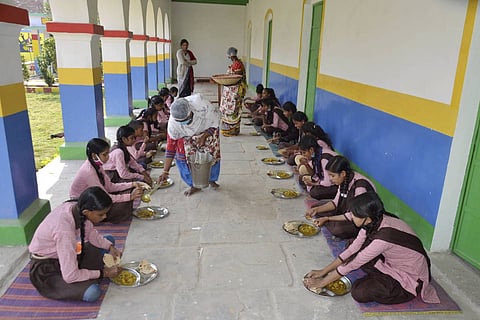
Figure 1 shows the menu of the common daily meal served to the hostels and schools in TGTWREIS and TGSWREIS. These schools follow a standardised daily food menu prescribed by the welfare societies. However, this study used this menu to cross-reference the actual nutritional intake of students and calculate BMI and haemoglobin (HB) levels using WHO guidelines.
The result? Despite receiving regular meals, most students showed signs of Severe Acute Malnutrition (SAM) or Moderate Acute Malnutrition (MAM). SAM refers to very low weight-for-height, severe wasting, or very low MUAC (mid-upper arm circumference). MAM refers to moderate wasting or moderately low weight-for-height.
These signs of malnutrition suggest that the quantity of food may be adequate, but the quality and balance of nutrients, especially iron, protein, and micronutrients is insufficient.
Study finds 80% of students below healthy BMI range
The nutritional assessment conducted among 428 students, aged between 11 and 18 years, from Coding Academy, a government residential school near Hyderabad, has revealed a worrying trend of undernutrition. The student population surveyed consisted of 218 girls and 210 boys. According to the study, a significant 80% of the children were classified as underweight based on World Health Organisation (WHO) guidelines for Body Mass Index (BMI).
An in-depth gender-wise analysis highlighted that 83% of the girls and 78% of the boys fall into the underweight category. In contrast, only a small share, 17% of girls and 22% of boys, had BMIs within the normal range. Overweight and obesity were found to be rare, with just one of boys slightly above the normal BMI, and no cases of obesity recorded among boys or girls.
The data suggest that issues of excess weight are minimal among students, while undernutrition appears to be a far more pressing concern. The BMI analysis further categorised underweight students into mild, moderate, and severe thinness. Students with BMI values between 17–18.49 fall under mild thinness (35%), those between 16–16.99 are considered moderately thin (28%), and those with values below 16 are identified as severely thin (37%).
These findings point to a need for focused interventions in school nutrition and health programmes. As most students appear to be falling short of healthy weight standards, ensuring balanced, nutrient-rich meals and raising awareness about dietary needs may help address the issue of undernutrition. The study concludes that timely action is essential to support the physical and mental development of students, enabling them to perform better academically and build healthier futures.
The findings from Telangana’s residential schools lay bare a troubling paradox: even as the state pioneers digital empowerment and academic excellence for its most marginalised students, a silent health crisis brews in their hostels. With over 80% of students falling below a healthy BMI, undernutrition is not a marginal issue; it is a systemic one.
This is more than a statistic; it’s a wake-up call. Undernourished children cannot be expected to reach their intellectual potential, no matter how innovative the classroom. The dream of social mobility cannot rest solely on smartboards and coding labs; it must be built on well-fed bodies and healthy minds.
What does it mean for a society when children are given a laptop before they're given enough protein? Telangana’s model is visionary, but it must not forget that the foundation of learning is a healthy body. If we want our students to compete with the best, we must first feed them like the best. In building a ladder for marginalised children to rise, let’s not forget that no child can climb on an empty stomach.
As Telangana continues to inspire the country with its welfare-driven educational reforms, it must now lead by example in holistic child development. Nutrition audits, revised meal plans, and health tracking must become non-negotiable features of the residential school system. Only then can we truly claim to be empowering the next generation not just with knowledge, but with the strength to carry it forward.
Gummadi Sridevi is a Professor at School of Economics, University of Hyderabad; Amalendu Jyotishi, is a Professor at School of Development, Azim Premji University, Bengaluru; and Kavya Sanjaya is an Assistant Professor, Department of Economics, Christ (Deemed to be University), Bengaluru.
Acknowledgement: This study is a part of UOH-IoE funded Project titled, ‘Understanding and Addressing Food and Nutrition Security Issues among Vulnerable Groups: An Interdisciplinary Study in Andhra Pradesh and Telangana’. We thank Synergy India Foundation - Panacea Command Centre for their support in providing the data (this case study on the Residential School in Hyderabad – Coding Academy – has been prepared based on the data and information shared by the Synergy India Foundation) and, Telangana Social Welfare Residential Educational Institutions Society (TSWREIS) and Telangana Tribal Welfare Residential Educational Institutions Society (TTWREIS).
Follow TNM's WhatsApp channel for news updates and story links.