
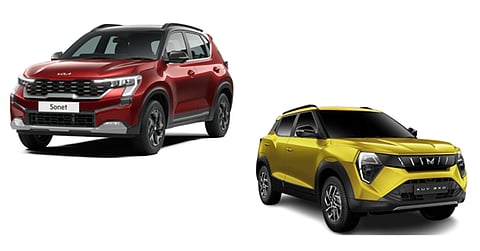
How Usage Patterns Influence the Choice Between Kia Sonet and Mahindra XUV 3XO
In the compact SUV segment, buyer decisions are rarely driven by specifications alone. Instead, real-world usage patterns often determine which vehicle feels more suitable. The Kia Sonet and Mahindra XUV 3XO may share similar segment space, but how and where they are driven can significantly influence which one aligns better with a buyer’s needs.
Urban commuting, highway travel, family use, and mixed-terrain driving each place different demands on a compact SUV. Understanding these differences helps clarify why one model may suit certain lifestyles better than the other.
Daily Urban Commuting
For buyers navigating dense traffic and tight parking spaces, manoeuvrability and ease of driving matter most.
The Kia Sonet, with its compact footprint and multiple transmission options, including iMT and DCT, offers flexibility for city drivers who value smooth gear shifts and reduced driver fatigue. Features such as ventilated seats also enhance comfort during stop-start traffic.
The Mahindra XUV 3XO, while similarly compact, emphasises torque-rich performance through its 1.2L TGDi engine producing up to 230 Nm. This can be beneficial in overtaking situations within city environments, particularly when quick acceleration is needed.
Urban-focused buyers may prioritise transmission convenience and comfort features, while others may prefer stronger torque delivery.
Highway and Long-Distance Travel
For frequent highway users, stability, power delivery, and advanced safety features become more important.
The SmartSense-style ADAS in the Sonet (Level 1) includes Forward Collision Avoidance Assist and Lane Keep Assist, supporting extended highway driving.
The Mahindra XUV 3XO integrates Level 2 ADAS features and a 360-degree surround view system. Buyers covering longer distances may appreciate the added driver assistance capability for sustained travel.
Engine choice also matters. Diesel variants in both models offer improved highway fuel efficiency and torque, influencing long-distance cost calculations.
Family-Oriented Usage
When the vehicle serves as a family car, safety and rear-seat comfort take precedence.
The XUV 3XO’s 5-star Bharat NCAP safety rating may appeal to families placing high importance on crash performance.
The Sonet, meanwhile, offers six airbags as standard and a more premium interior presentation, including a Bose sound system, which may enhance family comfort during longer journeys.
Rear-seat space and seating posture also influence family suitability, especially for buyers frequently travelling with multiple occupants.
Mixed Urban and Semi-Urban Conditions
For buyers in cities with uneven roads or occasional rural travel, ground clearance and suspension characteristics matter.
The XUV 3XO’s 201 mm ground clearance supports better underbody clearance in mixed road conditions.
The Sonet’s well-tuned suspension and compact dimensions, however, provide predictable handling in both city and light semi-urban conditions.
The choice may depend on how frequently the vehicle ventures beyond paved urban roads.
Technology and Connected Usage
Usage patterns also influence how technology is valued. Buyers who rely heavily on navigation, smartphone integration, and connected features may compare digital ecosystems closely.
The Sonet’s 26.03 cm touchscreen and digital cluster emphasise a clean and intuitive layout.
The XUV 3XO’s twin digital displays and Adrenox Connect ecosystem provide extensive connectivity options, including built-in Alexa integration.
Buyers often compare such features through structured research before making decisions. On platforms such as ACKO Drive, where specifications, safety features, and variant differences can be reviewed side by side, in addition to buying cars online, usage-based comparisons become more transparent and informed.
Cost Sensitivity and Fuel Preference
Running costs remain a significant factor for compact SUV buyers. Fuel efficiency, engine choice, and transmission options often influence long-term affordability.
The Kia Sonet offers multiple petrol and diesel powertrains, including a 1.2L naturally aspirated petrol, 1.0L turbo petrol, and 1.5L diesel engine. This range allows buyers to choose based on driving style and mileage patterns, with diesel variants typically appealing to those covering longer distances.
The Mahindra XUV 3XO also provides turbo petrol and diesel options, with the TGDi petrol variant offering higher torque output for buyers prioritising performance.
Rather than alternative fuels, the cost decision here revolves around fuel efficiency, maintenance expectations, and powertrain preference. Buyers typically align their choice with commuting distance, fuel pricing in their region, and intended ownership duration.
Conclusion
The choice between the Kia Sonet and Mahindra XUV 3XO is heavily influenced by usage patterns rather than segment overlap alone.
Urban commuters may favour transmission flexibility and comfort-oriented features. Highway drivers may prioritise ADAS capability and torque. Families may focus on crash-test ratings and rear-seat space. Mixed-condition users may value ground clearance and structural confidence.
In a compact SUV market defined by diversity, alignment with real-world usage ultimately determines which vehicle fits best. Buyers who clearly understand their daily driving needs are more likely to make a decision that remains satisfying long after purchase.
Disclaimer: This article is published in association with Acko Drive and not created by TNM Editorial.