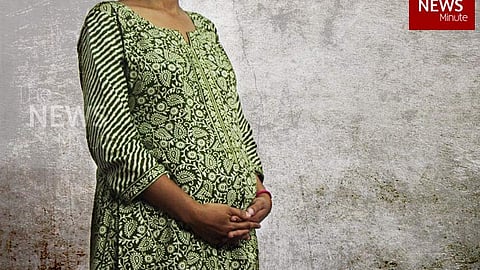

“An unmarried woman’s hymen must be guarded at all costs”: this phrase represents unanimity between family and community, who often gatekeep a woman’s symbols of virginity until consumption by her husband. The slightest whisper about vaginal penetration before marriage, even if it is merely hearsay, is considered the end of the woman’s ‘purity’, marriageability and dignity in our society. When this taboo is found ingrained in modern medical institutions that ought to be regulated by the rule of law, women lose all space to assert autonomy over their bodies and are left feeling reduced to their genitals.
Divya (name changed), a 32-year-old unmarried woman whom I know, recently experienced such a crisis in one of Hyderabad’s top medical diagnostic centres. Let me take you through her ordeal.
Divya discovered that she was pregnant a month ago. Though emanating from a consensual sexual relationship, she was not prepared to carry it to term. She visited a gynaecologist in her neighbourhood seeking medical termination.
The doctor noted down her age, marital status, and the date of her last menstrual period, and prescribed transvaginal ultrasonography (TVS) of the pelvis, among other diagnostic tests. She informed Divya that the TVS was necessary to determine the gestational age of the embryo, as required under Section 3 of the Medical Termination of Pregnancy Act, 1971, before proceeding with a termination.
Since the said hospital had no ultrasound imaging facility, Divya took her prescription to a popular, trusted, independent diagnostic centre nearby.
The centre duly issued an electronically generated bill to avail TVS and other blood tests the same day. She handed over the receipt at the radiology desk and awaited her turn, unaccompanied by her partner, friends or family. After an hour, her name was called out by the radiology staff.
What ensued was confusion and a denial of diagnosis, simply because Divya was not married. The two radiology personnel who enquired about Divya’s marital status refused to perform TVS, stating that “they do not conduct TVS on unmarried women.” Divya mentioned that her doctor was aware of her marital status and that no questions were asked when she presented the prescription for billing at the diagnostics centre earlier.
However, the personnel asserted that the procedure could not be done, and asked her to get a refund of her payment. On further probing, Divya was informed that the radiologist also said TVS cannot be done on unmarried women.
Divya opened an internet search engine on her mobile phone for quick research. It led her to understand that the TVS is performed using an endocavitary transducer. In other words, it involves the insertion of a scanning instrument that resembles the size and shape of a penis.
She realised that if she were indeed married, the transducer would be seen as a mantle of advanced medical technology since the first penetrator would presumably have been her husband.
Prejudice against unmarried women
To Divya’s agony, her single status had suddenly transformed the same transducer into a prohibited penetrative tool that would destroy her assumed virginity. She automatically became undeserving of a medical diagnosis, even though she was pregnant.
The duty manager at the billing desk informed her that it was against company policy to conduct TVS on unmarried women and that they did not have the requisite licenses and permissions to do so in the first place.
Feeling defeated physically and emotionally, Divya informed her gynaecologist about the incident, after which she was referred to an expensive maternity hospital elsewhere. The hospital was ready to conduct TVS with consent, lawfully and professionally, but at three times the cost.
Reeling under mental duress, Divya chose to spend more money against her means by rationalising that it was the price to pay to avoid moral scrutiny.
After signing a few consent forms and undertakings, the long-awaited TVS was finally conducted the next day at the maternity hospital. The investigation revealed that the gestational age of the embryo was five weeks and two days.
Divya heaved a sigh of relief and duly moved ahead with the medical termination of pregnancy.
Research shows that there are documented journalistic stories on the denial of TVS ultrasound reported in Delhi, Mumbai, and Bengaluru, among other cities. These disturbing hurdles faced by single women at diagnostic centres raise legal and constitutional questions.
Before we assume that a pregnant woman’s marital status must have no bearing on the investigation of her medical condition, it is wise to deep dive into law and policy to determine cultural taboos against unmarried women.
What does the law say?
The chief legislation that governs radiologists and diagnostic centres in India is the Pre-Conception & Pre-Natal Diagnostic Techniques Act, 1994. A plain reading makes it clear that the objectives and provisions of this law are strictly limited to prohibiting sex selection and detection.
The Act does not apply to people like Divya, carrying a naturally fertilised embryo under eight weeks of gestational age and seeking voluntary medical termination.
However, we find some respite in its revelation that ultrasonography of any kind is considered a non-invasive diagnostic test and that the parameters requiring diagnosis of a pregnant woman under Section 4 emanate from her own biological history alone, independent of her marital status.
The ICRI Guidelines for Imaging Protocols in Women’s Imaging, 2020, a document recognised and released by the Indian Radiological and Imaging Association (IRIA), gives an interesting insight. While the entire document does not mention separate guidelines for unmarried pregnant women, it does categorically state the following:
“Transvaginal sonography (TVS) gives high-resolution images as compared to transabdominal scans (TAS) and should be performed in all cases of gynaecological abnormality, unless contraindicated, i.e. virgo intacta, vaginismus, or mass lesions in the vagina which preclude insertion of the endocavitary transducer. TVS can overcome limitations of TAS….TVS may be done as the first and only examination in cases where a targeted exam is required or in follow-up studies.”
In other words, despite knowing well that the TVS should be the first and foremost approach for a targeted ultrasound exam, the radiology department at the diagnostic centre in question denied it to Divya, while admitting married pregnant women who were seemingly accompanied by their husbands.
Such denial, despite a valid prescription issued by a registered medical practitioner, not only amounts to contravention of their own imaging protocols, but also illegally discriminates against unmarried women.
Diagnostic centres with cost-effective services that operate unlawfully and unprofessionally seek to send out a dangerous message: Unmarried pregnant women have no automatic right to medical investigations or services deemed essential for them, no matter a doctor’s prescription, no matter their consent. They should try their luck elsewhere.
In the landmark judgement of X v. Principal Secy, Health & Family Welfare Department, Government of NCT of Delhi & Anr (2023) 9 SCC 433, a three-judge bench of the Supreme Court dealt with the question of reproductive autonomy in the context of abortions. It held that while a woman can become pregnant irrespective of her marital status, married and unmarried women have equal decisional autonomy to make significant choices regarding their own welfare.
Under Article 21, it is the woman alone who has the right over her body and is the ultimate decision-maker on the question of whether she wants to undergo an abortion.
It was further held that for unwanted pregnancies under 24 weeks, there is no rationale for excluding unmarried or single women from accessing safe and legal abortions under the MTP Act. It is discriminatory towards unmarried women and violative of Article 14 of the Constitution.
The apex court also noted that the law must not perpetuate the stereotype and socially held notion that only married women indulge in sexual intercourse and that such an artificial distinction between married and single women is not constitutionally sustainable. All women have the right to reproductive healthcare.
Applying the rationale of the Supreme Court judgement directly to Divya’s case makes it abundantly clear that when the law does not discriminate based on a woman’s marital status, no radiologist or diagnostic centre can deny TVS to an unmarried pregnant woman.
Implementation impaired by prejudice
Most importantly, Divya was given false information by the diagnostic centre that certain special licenses and permissions are required to perform TVS imaging on unmarried women. If there indeed is such a company policy, it is wholly illegal and unconstitutional.
Denial of TVS to Divya violated her right to equality and personal liberty, apart from amounting to a deficiency of services which were essential in her medical case.
This is not to say that caution must not be exercised while attending to cases of medical termination.
Radiologists indeed have to be more cautious when a minor girl, whether married or unmarried, comes to the ultrasound centre with a pregnancy. It becomes binding on them to inform the local police about it under the Protection of Children from Sexual Offences Act, 2012.
The IRIA protocol on the POCSO Act states that radiologists must confirm the age of the patient through her Aadhaar or other relevant identification. However, even with a minor, radiologists cannot refuse medical investigation and must ensure that it is done only after the consent of the child and her guardian is taken.
Borrowing this defined protocol for an adult woman and circling back to Divya, it is astonishing that neither her age was verified, nor was she presented with consent forms for the TVS medical investigation. She was simply verbally probed about whether she had a husband or not.
In the evolution of the law towards a gender equal society, modern institutions ought to play a vital role in liberating individuals from restrictions imposed by old and redundant cultural norms. Misguided fear of society, moral taboos or ignorance of standard professional practice should not determine radiological or medical decision-making.
Divya was not going to lie to the diagnostic centre when she had already made a true declaration of being unmarried to her doctor. In a world where women see eye to eye with men in most respects of life, she became certain that her sexual freedom and reproductive choices cannot be used to cause social embarrassment or mental duress by any person or entity.
Divya is now considering moving court against the diagnostic centre.
Anju Rao G is an advocate practising at the High Court of Telangana.
Views expressed are the author’s own.
