
Subscribe
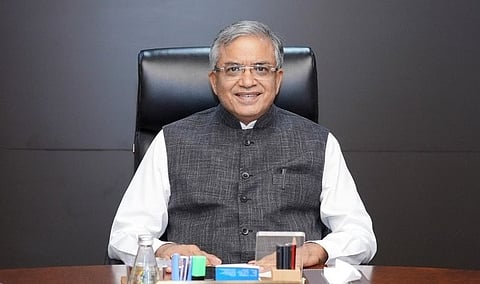
A total of 193 Opposition Members of Parliament — 130 from the Lok Sabha and 63 from the Rajya Sabha — submitted notices in both the Lok Sabha and Rajya Sabha, seeking the impeachment of Chief Election Commissioner (CEC) Gyanesh Kumar over alleged irregularities in the Special Intensive Revision (SIR) of electoral rolls in West Bengal.
This is the first time that a Chief Election Commissioner is being asked to be removed through a parliamentary process.
The MPs alleged serious lapses in the conduct of the SIR exercise, which they claimed had compromised the integrity of the electoral process.
Under Article 324(5) of the Constitution of India, the Chief Election Commissioner can be removed through a procedure similar to the impeachment of a Supreme Court judge. A motion seeking removal must be supported by a two-thirds majority of members present and voting in both Houses of Parliament. The notice can be introduced in either House but must be signed by at least 100 MPs in the Lok Sabha or 50 MPs in the Rajya Sabha, and it must specify the grounds for removal.
Once the motion is admitted, the presiding officer of the concerned House forms a special committee to investigate the allegations. If the committee concludes that the charges are valid, its findings are placed before both Houses for a vote. If the motion secures the required two-thirds majority in each House, the President of India issues the final order removing the CEC from office.
This removal procedure is also reflected in the Chief Election Commissioner and Other Election Commissioners (Appointment, Conditions of Service and Term of Office) Act, 2023, which states that the Chief Election Commissioner cannot be removed except in the same manner and on the same grounds as a judge of the Supreme Court. A similar framework is provided under the Judges Inquiry Act, 1968, which governs the impeachment process for judges of the apex court.
The SIR drive had drawn sharp criticism from many opposition parties, especially from West Bengal Chief Minister Mamata Banerjee, who alleged that the exercise resulted in the deletion of genuine voters from electoral rolls. She claimed the process was implemented in a hurried and selective manner, particularly targeting the Muslim community and benefiting the Bharatiya Janata Party. According to her, the verification process created anxiety among voters and led to instances of harassment. It was the TMC that initiated the impeachment notice.
Mamata Banerjee had also challenged the SIR exercise before the Supreme Court of India and personally appeared during the hearings. During the proceedings, the court underscored the importance of caution in carrying out such revisions and stressed that the process must ensure that no legitimate voter is excluded from the electoral rolls. The controversy surrounding the exercise has since become part of a wider political and legal debate on electoral integrity.
Follow TNM's WhatsApp channel for news updates and story links.
