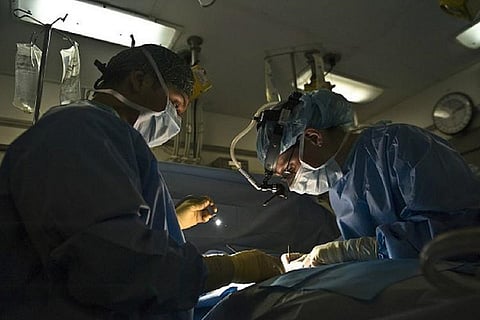

India has witnessed a fast resurgence in organ transplant activities post COVID-19, and for the first time, recorded more than 15,000 transplants in a year in 2022, Union Health Secretary Rajesh Bhushan said on Sunday, February 19. Along with this, there was an annual increase of 27% in the transplant numbers, Bhushan said at the National Organ and Tissue Transplant Organisation (NOTTO) Scientific Dialogue 2023, organised by the Union Ministry of Health.
Bhushan said there has been a fast resurgence in organ transplant activities post COVID-19, and for the first time, the country has achieved more than 15,000 transplants a year in 2022. There was an annual increase of 27% in the transplant numbers, he added.
Highlighting the need to update the existing structures and guidelines around organ transplant, Bhushan said, "Though we have existing structures at various governance levels like NOTTO at the national level, SOTTOs [State Organ and Tissue Transplant Organisation] at the state level and ROTTO [Regional Organ and Tissue Transplant Organisation] at the regional level, it needs to be ensured that they work as a well-oiled machinery while performing their mandate." Bhushan welcomed the changes that have taken place, such as updated guidelines and the domicile requirement being done away with.
Underscoring the changing demography of the country, the health secretary noted that India has a growing geriatric population and to ensure quality of life for them, it is critically important to update communication and awareness strategies, so that potential organ donors come forward. He suggested wide orientation and reorientation through training programmes, newly-designed courses and digital interventions for healthcare professionals and domain knowledge experts. Bhushan further added that "along with training programmes, wide publicity and awareness through not just print and electronic media but engaging with local stakeholders and non-governmental organisations can be taken up".
Highlighting the need for capacity building of the country's medical institutions, Bhushan said, "Despite having 640-plus medical hospitals and colleges, transplants remain a specialised service limited to some hospitals only. There is a need to expand the number of institutions where surgeries and transplants are undertaken." Thus, to increase the number of surgeries and transplants in the country, along with sensitisation and training for healthcare professionals, the physical infrastructure must be optimally utilised, he said, adding that there is also a need to identify the high-caseload institutions and bring them under the NOTT programme network.
