
The News Minute | January 16, 2015 | 4.22 pm IST
Earlier this week, the Supreme Court of India questioned a filmmaker about his "one-sidedness" in approaching a subject. The court also asked him where the "alternate picture" was. The Indian Express published some of the proceedings of when the case came up in court.
Pankaj Butalia is a documentary filmmaker whose film on Kashmir, Textures of Loss did not get clearance from the Censor Board and he had to approach the court for clearance. Textures of Loss is about how the conflict in Kashmir has impact the lives of the people. Some of them are seen critcising the Indian government and army, and some also talk about jihad.
Indian documentary filmmakers have always considered the Supreme Court as their protection from governments and censor boards. Among those who have had to approach the Supreme Court after facing trouble with governments and censor boards, are Anand Patwardhan and Rakesh Sharma and many others.
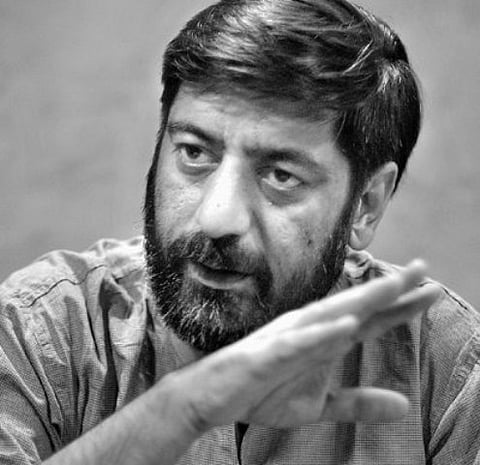
On January 16, Rakesh Sharma responded to the questions of one-sidedness and censorship on his Facebook profile. He also referred to the instance of Tamil author Perumal Murugan, who recently announced that Murugan the author was dead. Sharma has had his own run-ins with the censor board over his film on the Gujarat violence, Final Solution. Sharma's response to the Supreme Court's remarks have been reproduced here with permission:
The Supreme Court and Film censorship.
No, your Lordships, I do not need to portray or represent all points of view! As a painter, writer, singer, film-maker or artist, I have the right to present or interpret reality from a single perspective too.
When I film a farmer suicide story, I’m well within my rights to ignore the slew of justifications by the corporate sector and the government – to present their perspectives, they have a plethora of business channels, news television, DAVP's government ads, glossy brochures and factsheets that drown out the voice of the marginalized. I have the right to focus on and highlight this voice alone, don’t I? Or is the SC now narrowing down the scope of Article 19 of the Indian Constitution?
I have the right to situate my gaze and my vantage point the way I see fit –
* On the victim of a fake encounter, rather than the police that killed him in cold blood
* On the denial of justice to a riot victim, rather than the mobs, leaders and footsoldiers who justify the heinous violence
* On the violation of fundamental rights of a citizen, rather than the perspective of the State, its army or its police forces
* On the travails of a victim of domestic or sexual violence, rather than her abusers.
Insisting on a multi-sided view of the ‘story’ is a dangerous path to tread in a time when free speech is being readily curbed by emboldened goons, their political masters and various sarkari agencies. Can judiciary arbitrate on the need for or the lack of multiple vantage points, gazes and perspectives? Should it?
As a concerned citizen, I’d have welcomed the SC’s suo moto intervention in the Perumal Murugan episode, where a well-known scholar-writer has been browbeaten into withdrawing all his work, even announcing the death of the author Murugan! Do you not need to take to task the political organisations that forced him to flee his home, and the administration that insisted on a peace talk, to hammer out a ‘compromise’ with his tormentors, rather than protect his constitutionally guaranteed rights?
Or against those who hounded the late U R Ananthmurthy? Or against the pulping/ banning of books by Deepa Kumar and Wendy Doniger? Or cancellation of film screenings by Anand Patwardhan at an educational institution?
The observations cited in this newsreport have done little to enhance the reputation of the SC, known for its stellar record in upholding the right to free speech in the last several decades. It is also the language I have only heard in the past from the Executive and non-state actors like political parties and fringe groups, never from the Judiciary, which has been seen as the last bastion of free speech, rather than the last hurdle...
