
Subscribe
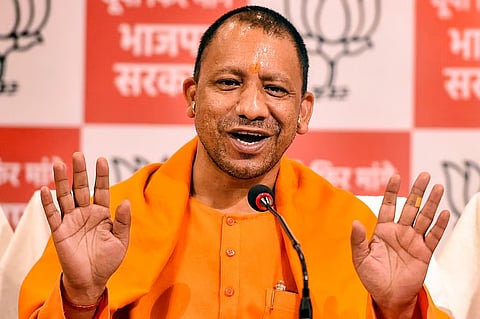
An independent commission comprising five retired judges of the Supreme Court and High Courts has written to Uttar Pradesh Chief Minister Yogi Adityanath, seeking supporting material and data for his reported claim that 1.27 crore Hindus were excluded from the state's electoral rolls during the Election Commission of India's (ECI) Special Intensive Revision (SIR) exercise.
In a letter dated November 21, the Independent Commission on SIR, proposed by the Lawyers' Association for Constitution (LAFC), said Yogi Adityanath's statement was directly relevant to its mandate of examining whether eligible voters had been unfairly removed from electoral rolls during the revision exercise.
The commission has requested the Chief Minister to furnish substantive data, supporting material or information indicating possible gaps in the methodology adopted during the SIR exercise that may have resulted in the alleged deletions.
The letter states that the commission would examine the material "with complete autonomy and impartiality" before arriving at its final findings.
The communication comes amid a political and administrative debate over the alleged discrepancies between Uttar Pradesh's panchayat electoral rolls and the Election Commission's Assembly electoral rolls, ahead of the 2027 Uttar Pradesh Assembly elections.
According to the commission's letter, its mandate extends beyond examining the constitutional and legal validity of the SIR exercise to assessing the methodology adopted and its impact on eligible voters and the final electoral lists, particularly in view of reports of large-scale deletions.
The commission has also cited the urgency of the matter, stating that the possible denial of voting rights to millions of electors and the impending elections require the relevant material to be furnished at the earliest.
"The Commission is working with a tight timeline and would appreciate if the necessary material is provided at the earliest," the letter stated.
Yogi Adityanath had reportedly claimed that 1.27 crore Hindu voters whose names appeared in Uttar Pradesh's panchayat electoral rolls were missing from the Election Commission's electoral rolls following the SIR exercise.
The Chief Minister had also referred to 66 lakh voters whose names were allegedly missing, including 55 lakh Hindu beneficiaries of government welfare schemes and approximately 4.5 lakh voters in the 18-19 age group. He had questioned how the names went missing and who was responsible for the alleged discrepancy.
However, the Election Commission's position on the religious classification of voters has also become a significant part of the controversy.
On November 17, Uttar Pradesh Chief Electoral Officer Navdeep Rinwa clarified that the Election Commission does not maintain voter data based on religion or caste. He said the electoral database contains details such as voters' names, age, gender, house numbers and family-related information, but does not record their religious or caste identities.
Rinwa also pointed out that analyses of voters based on religion conducted by media organisations or independent analysts should not be treated as official Election Commission data.
The Independent Commission on SIR is chaired by Justice Madan B Lokur, former judge of the Supreme Court of India.
Its other members are Justice AK Patnaik, former Supreme Court judge; Justice Badar Durrez Ahmad, former Chief Justice of the Jammu and Kashmir High Court; Justice Rekha Sharma, former judge of the Delhi High Court; and Justice Anjana Prakash, former judge of the Patna High Court.
The commission was constituted as a civil society initiative proposed by the Lawyers' Association for Constitution to examine concerns surrounding the design, implementation and overall impact of the SIR exercise.
It has stated that its assessment will draw upon public hearings, empirical and field research, and other verifiable material.
The SIR exercise in Uttar Pradesh began on October 27, 2025, and the revised final electoral rolls were published on April 10, 2026. The state's electorate, which stood at approximately 15.44 crore before the exercise, declined to around 13.39 crore following the revision, according to reports.
Subsequently, the Election Commission published the draft electoral rolls under the Special Summary Revision (SSR) process on November 17, 2026.
According to the Uttar Pradesh Chief Electoral Officer, the draft roll contained 13,58,68,905 electors, including 7,38,58,510 men, 6,20,06,353 women and 4,042 third-gender voters. This represented a net increase of 18,84,113 electors compared with the final electoral roll published after the SIR in April.
The claims and objections period for the draft electoral rolls is scheduled to remain open until December 16, 2026. Eligible citizens can apply for inclusion, deletion or correction of entries through Forms 6, 7 and 8, respectively. The final electoral roll is scheduled for publication on January 4, 2027.
