
Subscribe
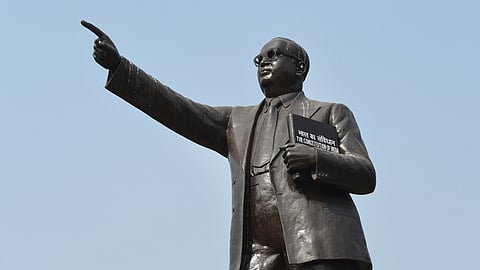
Indian society rests on a graded hierarchy called caste, which Dr BR Ambedkar described as “an ascending scale of reverence and a descending scale of contempt.” This description captures the everyday reality of how respect and humiliation are distributed. From this recognition follows Ambedkar’s most urgent demand: the annihilation of caste. Ending caste is not only a moral aspiration but the central reform required to build genuine social democracy.
Public understanding of caste has largely been shaped through a Dalit lens– a powerful and necessary perspective which exposes the brutality of untouchability and structural violence. Yet it is not enough to capture the full complexity of caste.
What remains less examined is the position of those just above Dalits in this hierarchy: the thousands of communities grouped under the administrative category of Other Backwards Classes.
Caste, in India, is often narrated as a binary of upper castes versus Dalits. This framing, while politically potent, erases the layered realities of OBCs. This vast and diverse category experiences exclusion even as some of its groups reproduce it.
OBCs are not outside the caste– they are shaped by it, harmed by it, implicated in its reproduction, and, at times, perpetuate it. But their struggles cannot be dismissed simply because of this. Reducing them solely to perpetrators is to criticise without any nuanced understanding of the OBC problem. Their position in the caste order demands recognition of both the exclusions they face and the contradictions they embody.
Dr BR Ambedkar’s metaphor of caste as “graded inequality” is especially instructive here. OBCs, positioned on the middle rungs of this ladder, often internalise both ends of the spectrum. They seek validation from those above while distancing themselves from those below. This is not a moral failure but structural conditioning.
It shows how caste works not only through institutions but also through desire, shame, and aspiration. The OBC experience is marked by constant negotiation between proximity and exclusion, between visibility and voicelessness. Their contradictions are not incidental; they are central to how caste reproduces itself across generations.
Unlike Dalit and Adivasi communities, whose exclusion is marked by spatial segregation and cultural distinctiveness, the case of OBCs is more complex. As the sociologist TK Oommen notes, OBCs are above the ritual pollution line in the caste hierarchy. They are not excluded from village social life, nor do they possess a culturally distinct identity like Adivasis. They share language, religion, and many aspects of everyday life with dominant caste groups.
Yet, despite this proximity, elite formation among OBCs has been slow. The size of their elite category remains disproportionately small compared to their numerical strength in the population.
This paradox of cultural inclusion and structural exclusion has shaped the trajectory of OBC aspirations. After independence, only a small section of OBC families who had the means encouraged their children to pursue professional fields such as engineering, medicine, and government services. These careers were seen as secure routes to mobility, respectability, and survival, though they remained accessible to only a limited percentage of the community. For many others, traditional caste-based occupations became economically unsustainable, forcing a transition into informal and precarious labour, undervalued, unprotected, and excluded from formal skill recognition.
In this pursuit of material advancement, OBCs were largely absent from the philosophical and intellectual realms. Upper castes dominated the humanities and social sciences, while Dalit thinkers built powerful traditions of resistance and critique. OBCs, by contrast, did not cultivate a sustained presence in academic theory, research, or public thought.
The pressure to prove worth to dominant-caste institutions and the state arose because OBC labour and knowledge were historically undervalued.
With traditional occupations collapsing, technical success in engineering, medicine, and government services became the recognised pathway to dignity and survival. With little mentorship in critical disciplines and an internalised belief that philosophy and politics belonged to others, OBCs were steered away from intellectual spaces. The absence of a pan-India OBC intellectual movement is not apathy but the result of structural exclusion and lack of ideological space.
Even among the few who entered the realm of thought, exclusion persisted. Kancha Ilaiah Shepherd, one of the most prominent OBC intellectuals, faced sustained hostility for naming caste, challenging Hindu orthodoxy, and asserting a Bahujan epistemology. His marginalisation is not only political, but also philosophical.
It reflects the discomfort of dominant institutions with OBC thought that refuses to be servile, apologetic, or assimilated.
The absence of OBC voices in intellectual spaces is not just about ideas; it translates into lived silences. This silence is both imposed and internalised.
OBC students in elite institutions often carry the burden of invisibility. They are rarely seen as theorists, seldom invited into spaces of reflection, and often discouraged from pursuing the humanities. Some endure this burden quietly. Others break under it. The suicides of OBC students are not isolated tragedies; they are structural indictments. They show how caste operates not only through denial of opportunity but also through denial of belonging.
In most Hindu temples, the priesthood remains the monopoly of the upper castes. OBCs, despite being deeply embedded in the ritual and cultural life of villages, are denied access to sacred roles. Their labour sustains religious institutions, yet their bodies are kept outside the sanctum. Kancha Ilaiah Shepherd has long critiqued this Brahminical monopoly over spiritual life.
Building on his insight, this exclusion can be understood as a form of spiritual apartheid — a system that denies OBCs dignity in the very spaces they help sustain. Even in marriage, caste boundaries remain rigid. Inter-caste marriages between OBCs and upper castes are rare and often resisted, revealing the deep social distance that persists despite constitutional equality.
Political representation is equally fragmented. While OBCs hold electoral strength in many states, their leadership is often mediated through dominant sub-castes or party structures that sideline OBC concerns.
There is no national OBC party, no sustained campaign for OBC rights, and no unified voice demanding structural reform. Welfare schemes exist, but they are piecemeal and often reinforce caste-linked occupations instead of dismantling them.
The lack of a pan-India OBC movement has consequences. OBCs are often treated as political arithmetic rather than a social category. Their demands are reduced to reservation percentages instead of structural transformation. Their exclusion is seen as temporary, not systemic. And their complicity in caste discrimination, especially against Dalits, is rarely interrogated with nuance.
This complicity must be acknowledged not to shame, but to deepen our understanding of the issue. Caste is not just a ladder; it is a web. Those caught in it often replicate its logic to survive. Some OBC groups have historically participated in caste-based discrimination against Dalits and Adivasis. This is a painful truth, but one that must be confronted. Survival cannot justify silence. Reflection and accountability are essential.
OBCs are both oppressed and, at times, oppressors. They suffer caste, but they also reproduce it. This duality must be named if we are to build a politics that is honest, transformative, and inclusive. Anti-caste discourse cannot afford to treat OBCs as either allies or adversaries in simplistic terms. It must engage with their contradictions, their silences, and their potential.
The future of anti-caste politics depends on solidarity across oppressed groups, and that solidarity begins with truth. OBCs are not outside caste; they suffer it. They must name it, challenge it, and organise against it, not only for others but for themselves.
Anti-caste politics will reach its full strength only when OBCs enter as thinkers, leaders, and agitators. A few voices have emerged, but their presence remains limited. Their participation must be ideological rather than merely electoral, structural rather than symbolic.
This requires a shift in imagination. OBCs must move beyond welfare schemes and vote banks to create platforms of authorship, cultural assertion, and clarity of thought. They must confront not only savarna domination but also hierarchies within their own communities. Solidarity with Dalits and Adivasis must be forged through shared structural struggle. OBC youth, scholars, and activists must see themselves not as intermediaries but as subjects of caste violence. Their struggle is not secondary; it is central.
The pursuit of dignity, representation, and justice must include OBC stories, their experiences of exclusion, and their aspirations for a different future. Imagine a politics where OBCs are not simply counted in surveys but heard in movements, not merely recipients of schemes but authors of justice, where caste is not only endured but dismantled.
If OBC marginalisation is recognised as caste marginalisation, anti-caste politics in India will move forward, and the movement will gain the strength it needs to transform society. In doing so, it will bring us closer to realising Ambedkar’s dream of the annihilation of caste, a horizon where dignity is shared, justice is structural, and freedom is universal.
Sai Ganesh Akarapu is a researcher from an OBC background. His work focuses on caste, labour, and representation, with a particular emphasis on the structural exclusion of OBC communities.
Views expressed are the author’s own.
