
Subscribe
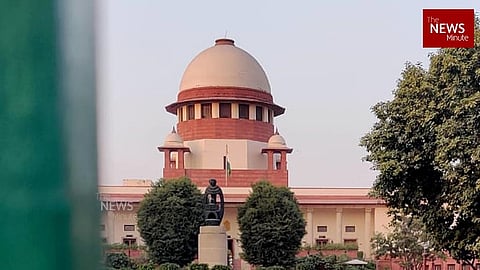
The Supreme Court on Monday, October 5 clarified that it had not approved the modified Form 6 being used by the Election Commission of India (ECI) during the ongoing Special Intensive Revision (SIR) of electoral rolls. Chief Justice of India Surya Kant made the observation while hearing a petition challenging alleged unilateral decisions taken by Chief Election Commissioner (CEC) Gyanesh Kumar.
“Any modified Form 6 has not been approved by us. Let’s be clear. When the record is produced, we would like to see who has modified,” CJI Surya Kant observed.
The clarification comes after the ECI said in a press note on September 26 that the declaration attached to Form 6 for the SIR exercise had been approved by the Supreme Court.
“The declaration attached to Form 6 for SIR has been upheld by the Hon’ble Supreme Court. For non-SIR period, the Forms applicable as Rules (Registration of Electors Roles 1960) will be used,” the ECI had said.
The controversy relates to changes made to Form 6, which is used by people seeking inclusion in electoral rolls. The online Form 6 application was altered in July, during the third phase of the SIR, to require applicants to provide their parents’ details from the previous SIR.
The change was made after the Supreme Court’s May 27 judgement concerning the SIR in Bihar.
The ECI’s claim that the Supreme Court had upheld the additional declaration had come under scrutiny because of what the May judgement actually said about the poll panel’s powers. The SC had held that the ECI retained a degree of authority to formulate an appropriate documentation framework for an SIR. However, the court also said that this authority was “not unbounded” and had to remain within the existing statutory scheme.
The judgement said, “In devising such a framework, the Commission must remain cognisant of the existing statutory scheme, and any departure therefrom must be informed by a rational nexus to the object sought to be achieved.”
It further said: “The formulation of the documentation regime must thus reflect a calibrated balance in drawing from the statutory framework, while adapting it, where necessary, to effectively serve the purpose of ensuring the accuracy and integrity of the electoral roll.”
The Registration of Electors Rules, 1960, flowing from Section 28 of the Representation of the People Act, 1950, prescribe the framework for electoral forms. Changes to Form 6 require an amendment to the rules by the government and are subject to parliamentary scrutiny.
The Form 6 issue had also become contentious after the Indian Express had reported that Election Commissioners Sukhbir Singh Sandhu and Vivek Joshi reportedly objected to the changes.
Joshi had recorded that Form 6 could not be changed without the government amending the rules, with Sandhu agreeing with the objection. Sandhu subsequently recorded on August 13 that the change was “unauthorised and illegal” and “must be removed immediately”.
The IE report also said that the two Election Commissioners had raised objections on at least 14 occasions over decisions and orders related to the SIR which they said had been issued without their knowledge or recommendation. The report triggered criticism of CEC Gyanesh Kumar and demands for his resignation from Opposition parties.
The ECI’s September 26 press note did not refer to the objections by Sandhu and Joshi. It also did not explain why Form 6 was changed for the SIR period, why the form was being used both for new electors and people seeking re-inclusion after deletion, or who approved the change.
The Supreme Court’s observation on Monday came during the hearing of a writ petition filed by advocate Shailendra Mani Tripathi seeking action against CEC Gyanesh Kumar.
The petitioner has challenged 14 decisions allegedly taken unilaterally and sought the constitution of an independent Judicial Inquiry Commission or Special Investigation Team headed by a retired Supreme Court judge and assisted by cybersecurity and IT experts.
The petition also seeks directions to the competent authority to register complaints and initiate prosecution under Section 32 of the Representation of the People Act, against Gyanesh Kumar, Senior Deputy Election Commissioner Maneesh Garg, Director General (IT) Seema Khanna and other officials allegedly responsible for breaches of official duty.
During the hearing, CJI Surya Kant told senior advocate Menaka Guruswamy that the prayers in the petition appeared to be “omnibus” and “jumbled up”. Guruswamy maintained that she stood by the prayers.
The bench comprising CJI Surya Kant, Justice Joymalya Bagchi and Justice V Mohana issued notice on the petition and tagged it with another matter challenging decisions taken by the ECI under CEC Gyanesh Kumar.
The Supreme Court also refused to pass an interim order suspending the CEC. It issued notices to the ECI and the Union government seeking their responses within a week on the challenge to the manner in which decisions were allegedly taken without the approval of the other two Election Commissioners.
The court’s clarification on Monday comes amid continuing questions over the legal basis for the modified Form 6 and the ECI’s claim that the additional declaration had been approved by the Supreme Court.
Follow TNM's WhatsApp channel for news updates and story links.
