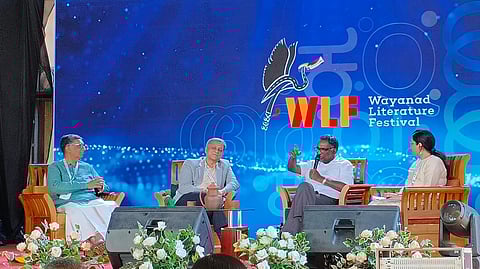

A lack of diversity in the composition of Supreme Court judges and what one speaker described as a “small oligarchy as Ambedkar feared” featured prominently in a panel discussion held on December 28 at the Wayanad Literature Festival. The session titled ‘Seventy-five years of Supreme Court of India: What history does it leave behind,’ was attended by retired SC judge Jasti Chelameswar and two SC lawyers—constitutional law expert Shyam Divan and legal scholar Professor G Mohan Gopal. Moderated by Leena Gita Raghunath, the panel also debated the exigent need for institutional reforms.
Speaking about diversity, advocate Mohan Gopal said the SC was the court of a very small section of people. He said, “In 75 years, we have never had a judge in the Supreme Court with the surname Yadav; we have never had an Ezhava judge. The SC is controlled by four castes, a small set of communities. The courts are controlled by a small oligarchy, as Ambedkar feared.”
Advocate Shyam Divan also agreed that what the courts needed urgently was diversity. “Having representation in the courts through a diversity push will make it a people’s court. We also tend to concentrate too much power on the CJI and the chief justices of high courts. It’s important and necessary to give up some power. Big institutional reforms can help,” he said.
Asked about the 80,000 pending cases in SC and a monthly disposal rate of 5,000 cases, Justice Chelameswar said, “In one word, it's chaos; it simply means chaos.”
“God alone knows how long the court will take to solve or decide all these (80,000) cases. I doubt whether they will ever be able to decide all those cases. Even if the pending cases are disposed of after 50 years, cases keep getting added to the SC registry.”
He criticised the hearing of bail petitions by the SC. “Why is the highest court in the county hearing bail petitions? Bail is a very important aspect of liberty. I am not disputing it. But should it really go to the SC? If so, then there is something wrong with the system. Not with the court or individual judge. We should end it (bail pleas) with the district court,” he said.
Justice Chelameswar also pointed out civil society's role in democracy. “What reform can you expect here in the system? It is for civil society to constantly evaluate and audit the performance of any institution in every institution in a democracy. But if civil society keeps quiet, then nothing can happen,” he added.
Both Justice Chelameswar and Shyam Divan argued that the judges in Indian courts should not be burdened with administrative work. “Professional management of courts can help us make more strides,” Shyam Divan said.