
Subscribe
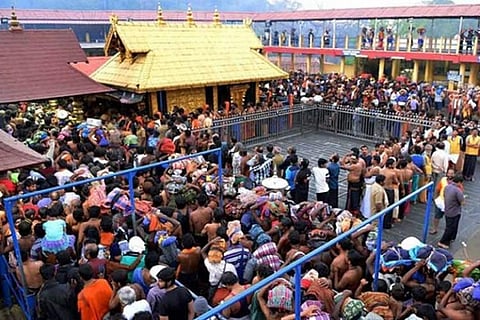
The Kerala High Court on Tuesday, June 9, instructed the director of the Vigilance and Anti-Corruption Bureau (VACB) to designate a senior officer to examine the results of the investigation into the alleged embezzlement of funds from the sale of Aadiya Srishtam Ghee at the Sabarimala temple. The officer is to check whether any violations of the Bharatiya Nyaya Sanhita and the Prevention of Corruption Act were proven against the accused.
The High Court allowed this newly appointed officer a time period of four weeks to cross verify the records, re-evaluate the findings in the report, and submit a new report. The bench comprising Justices V Raja Vijayaraghavan and KV Jayakumar also expressed disappointment with the earlier report submitted by the vigilance team, which had suggested dropping further action against 41 accused persons. The report was made on the ground that their responsibility could not be fixed due to the absence of properly maintained records.
For additional consideration, the case has been postponed to July 15.
In accordance with a previous High Court order, a special investigation team probed the alleged misplacement of funds from the sale of ghee at the temple between November 17, 2025 and December 27, 2025. The report made by the team showed a loss of Rs 17.14 lakh incurred by the Travancore Devaswom Board (TDB).
Forty-three TDB employees have been named as accused in the case. Even though the loss was determined to be the collective responsibility of the 43 accused, the vigilance team sought permission to make a final report before a special court in Kollam, recommending the closing of the case against all but two employees, Aneesh MT and Sunil Kumar KR.
The report, however, recommended departmental disciplinary proceedings against the 41 employees and steps to recover the losses incurred by the TDB. Rejecting the report, the High Court noted that at face value, it appeared to be out of place with the findings recorded. It also said that the report tended to minimise the magnitude of the findings relating to the losses faced by the TDB.
The High Court stressed that the purpose of the investigation was not just to determine the logistics of the losses faced by TDB, but also to find out how the losses were incurred, identify the gaps in the system that enabled it, and to determine who is responsible for it.
This article was written by a student interning with TNM.
