
Subscribe
With the social justice credentials of the Congress taking a hit in Karnataka following Siddaramaiah’s exit from the Chief Minister’s Office, the party is desperately trying to find a middle path. In order to counterbalance the interest groups represented by CM designate DK Shivakumar, the Congress is toying with the idea of turning the Deputy Chief Minister’s Office into the nodal centre for social justice.
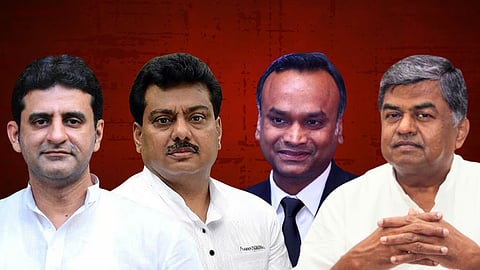
The wrangling within the party now is over how many DCMs should be appointed and from which marginalised community. According to insiders, there is a serious proposal to appoint four DCMs – one each from the Dalit, Muslim, OBC and Lingayat communities.
This formula is pushed as a way to regain the people’s trust after years of political turmoil during which Siddaramaiah was widely lampooned in civil society circles for focussing more on saving his chair than pushing social justice.
Despite the various criticisms directed at Siddaramaiah’s tenure as Karnataka Chief Minister from 2023 to 2026, he remained one of the very few “decent, non-commercial, pro-people’s movements, and intellectually serious Chief Ministers” in the country. Within this very month, four Chief Ministers of a similar political character lost their positions — MK Stalin, Pinarayi Vijayan, and Mamata Banerjee. Siddaramaiah joins that list, albeit as a victim of internal sabotage.
If actor Vijay, who lacks even a minimal background in public struggles, replaces Stalin, or if VD Satheesan — a leader perceived as lacking ideological depth and seriousness — replaces a theoretically grounded leader like Pinarayi Vijayan, or if Suvendu Adhikari, viewed by critics as aligned with the Union government, replaces the fiery Mamata Banerjee, it reflects a broader political trend.
In these transitions, the Congress party’s role in resisting the BJP — despite claiming to fight against authoritarianism — cannot be considered particularly significant.
However, at a time when the country is witnessing a severe shortage of intellectually progressive and socially committed Chief Ministers, replacing Siddaramaiah with DK Shivakumar — a businessman by his own affidavit submitted before the court — appears to be ill-timed and politically questionable.
That’s why, while selecting Deputy Chief Ministers, the Congress leadership must ensure that the appointments are not merely tokenistic representations based on caste identities. Instead, the party must choose legislators from Dalit, Muslim, Lingayat, and OBC communities who possess a minimum level of social commitment, constitutional responsibility, and progressive thinking. Only then can the political and ideological space vacated by Siddaramaiah be meaningfully filled.
That is precisely why discussions have now begun around the idea of a “Dalit Deputy Chief Minister” in a state which has never entertained the idea of a Dalit in the CM’s post. However, the concept of a “Dalit DCM” should not become merely symbolic or tokenistic.
The question of Dalit representation in Karnataka politics is not new. For several decades, political parties have treated Dalit votes as a decisive electoral force, yet the community’s struggle for proportional share in real power structures remains unresolved. While opportunities have been given in the form of ministerial posts, corporation boards, and party positions, it is still debatable to what extent Dalit leadership has been genuinely accepted at the centre of decision-making.
In this context, the position of a “Dalit DCM” should not merely serve as a political ornament or a balancing mechanism within caste equations. It must become a post carrying genuine administrative, ideological, and political influence.
For that, caste identity alone is insufficient; what is required is leadership with a clear political vision, administrative capability, constitutional commitment, and an understanding of modern politics.
In this context, the case of Priyank Kharge has become an interesting point of conversation. From the time he entered electoral politics around 15 years ago, his supporters have hailed him as the prodigal son who will avenge the injustice done to his father.
It is their hope that the CM post, which was denied to Mallikarjun Kharge on more than one occasion to accommodate dominant caste aspirants, will one day belong to Priyank.
It would be hypocritical to prevent a Kharge from inheriting the Kharge legacy purely because it would promote a dynasty. It would be unfair and not just because this is a party led by the Gandhi family.
The constitutional safeguards for Dalits are designed to create inter-generational wealth within communities that have accumulated the trauma of untouchability over generations. A Dalit dynasty in national politics may even be desirable given there are none at the moment.
So far, the practice of giving positions to Dalits in Karnataka politics has largely functioned as part of “balance politics.” In other words, the post is created, but real authority rests elsewhere. Dalit leaders are visible on public platforms, but they are often excluded from shaping the actual direction of the government or the party.
Priyank Kharge appears to be an exception to that pattern. Rather than limiting himself to the identity of merely being a “Dalit leader,” he has developed a broader political personality with clear positions on secularism, communal harmony, governance, technology, industry, education, youth issues, and constitutional values.
In recent years, Karnataka has witnessed growing public debates around hate politics, religious polarisation, and anti-constitutional tendencies. In this context, Priyank has consistently emerged as perhaps the only Dalit politician who has spoken clearly and firmly in defence of the Constitution, freedom of expression, social justice, and secular values.
He has not confined himself merely to speeches; he has also attempted to implement the constitutional ideals of fraternity within governance itself. In the Assembly, in the media, and on public platforms, he has consistently tried to ideologically challenge the politics of the Sangh Parivar. This distinguishes him not merely as an administrator, but as an ideologically driven leader.
A Dalit Deputy Chief Minister should not merely be “a Dalit face.” The position must represent the Constitution itself. From this perspective, Priyank’s political style becomes particularly significant.
Through electoral politics, the Congress party may be able to defeat the BJP. However, the RSS and communalism cannot be defeated through elections alone. What is required is an ideological resistance against the RSS and communal politics. The Sangh Parivar is not engaged merely in electoral politics; it systematically attempts to expand its cultural and ideological influence across all sectors of society.
Even before becoming an MLA, while he was active only in the Youth Congress, Priyank had travelled from Kalaburagi to Mangaluru to mobilise people against communal polarisation. He was among the leaders who strongly opposed RSS route marches and initiated a national-level discussion about the organisation’s lack of official legal registration and accountability.
His sharp statements against communal politics, as well as his strong criticism of the RSS, BJP, and Hindutva politics, gave the Congress party a distinct ideological edge. During debates surrounding Gandhi versus Godse, saffronisation of textbooks, communal riots, claims that Ambedkar alone did not draft the Constitution, and the idea of a Hindu Rashtra, Priyank played a decisive role as a minister.
In many ways, Priyank’s role was significant in helping the Karnataka Congress secure 136 seats in the 2023 Assembly elections. It was Priyank who first launched the campaign branding the Basavaraj Bommai-led BJP government as the “40% government” over corruption allegations. That campaign later evolved into the “Pay CM” campaign, which severely damaged the BJP politically.
His stand during the hijab controversy and on the issue of religious freedom in educational institutions attracted severe criticism from BJP leaders and Hindutva groups. However, Priyank firmly defended his position as one rooted in constitutional rights.
During the hijab controversy, halal controversy, “love jihad” campaigns, and incidents of moral policing in the state, Priyank directly criticised the Sangh Parivar. He was successful in shaping the narrative that “religious hatred is being manufactured to divert attention away from the issue of unemployment among youth.”
Priyank is also a leader who responds directly — and at times aggressively — on social media and in political discourse. While politically conscious and ideologically committed activists describe this as “courageous and assertive politics,” some internal critics within the party dismiss it as “unnecessarily inviting trouble.”
There are also those who argue, “Priyank Kharge can speak like that only because his father Mallikarjun Kharge occupies a high position. Where do others have that kind of freedom?”
But then, why do the sons of other influential political leaders not speak in the same manner? Why does the son of former Chief Minister Dharam Singh not engage in such politics? Why does Siddaramaiah’s son not adopt a similarly aggressive political approach? The answer is simple: it is fundamentally a matter of political will and conviction, nothing else.
Even at a personal level, Priyank is seen as maintaining a relatively clean public image. Unlike many other Dalit politicians, he has not used politics as a means for business expansion or personal commercial interests.
There are no corruption allegations against him. There are no known cases against him involving corruption, tax evasion, or financial irregularities that could potentially be used by agencies such as the IT Department, ED, or CBI to politically pressure or control him. Because of this, he is seen as someone who can work without yielding to intimidation and remain committed to ideological politics.
Cases have indeed been registered against Priyank Kharge, including Crime Nos. 2990/2023, 0019/2023, 0149/2022, 0054/2022, 12/2022, 20/2022, 0001/2022, 0001/2022 (Kanakapura Police), and 0002/2022 (Sathanur Police). However, these are portrayed by his supporters as cases arising out of political protests and struggles conducted on behalf of the Congress party, rather than cases involving corruption or personal enrichment.
Therefore, for those who believe that Karnataka needs a Deputy Chief Minister who possesses ideological clarity, an Ambedkarite political outlook, freedom from corruption allegations, and independence from the fear of ED, CBI, or IT raids, Priyank emerges as a suitable choice.
Whether one agrees or disagrees, DK Shivakumar is often perceived as carrying the image of a feudal, business-oriented, and soft-Hindutva politician. Therefore, at the very least to create a “real political balance” within the 2026–28 government, the Congress party, according to this argument, should appoint an Ambedkarite, anti-communal, and non-business-oriented leader like Priyank Kharge as Deputy Chief Minister.
Muslim Deputy Chief Minister
With Siddaramaiah stepping down from the Chief Minister’s post, concerns have emerged regarding the possible decline of “AHINDA politics” in Karnataka. Whenever the discussion around AHINDA politics arises, after Siddaramaiah, the name that most prominently comes forward is Satish Jarkiholi from the Naika community.
However, almost never are names from minority communities — the very first component represented in the acronym “AHINDA” — seriously discussed. One major reason for this is the perceived lack of strong minority leadership in Karnataka.
Although Karnataka has several Muslim MLAs, MPs, ministers, and heads of corporations and boards, there remains a visible absence of what many would call “dignified Muslim leadership.” At present, when Muslim leadership within the Congress party is discussed, the name of BZ Zameer Ahmed Khan is often the first to emerge. However, critics argue that the style and political conduct associated with Zameer Ahmed Khan have, in some ways, further contributed to the humiliation and suspicion already faced by the Muslim community.
The Muslim community in India already faces stereotyping and collective suspicion in many spheres of public life. For instance, the way Muslim politicians are often portrayed as non-serious in films bears a resemblance to the public image associated with leaders like Zameer Ahmed Khan.
Such representations contribute to the growth of stereotypical attitudes against Muslims in society. In this context, leaders like Rizwan Arshad — who are seen as not using politics for business interests and who carry relatively little controversy — appear to many as a more suitable alternative.
Although the Muslim community constitutes a significant population in Karnataka, there has long been dissatisfaction over the lack of adequate representation at the highest levels of state power. Particularly in a period marked by the rise of BJP and Hindutva politics, feelings of political insecurity among minority communities have intensified. In such a situation, appointing Rizwan Arshad as Deputy Chief Minister would not merely be a political appointment; it would send a powerful message to minority communities that “you are equal stakeholders in this state.”
Rizwan Arshad emerged through student politics and has earned a reputation for using balanced and measured language in public discourse. Leadership of this kind could help rebuild confidence in the Congress party among the urban middle class, youth, and educated sections of society. More importantly, Rizwan Arshad could serve as an effective counter to the stereotypical perceptions surrounding Muslim political leadership in Karnataka.
There is growing public fatigue within the Karnataka Congress regarding traditional factionalism and old styles of politics. In this context, Rizwan Arshad is increasingly seen as a young, soft-spoken leader who represents dialogue-oriented politics rather than confrontational politics.
Over the past few years, Karnataka has witnessed controversies surrounding the hijab issue, halal campaigns, mosque-temple disputes, and the rise of hate-driven politics. In such an atmosphere, it is not enough for the Congress party to merely engage in “anti-BJP politics.” It must also offer an alternative political vision.
However, an alternative does not mean aligning with communal forces. While Zameer Ahmed Khan has faced allegations of associating with communal Muslim organisations, UT Khader from the coastal region was criticised for echoing an RSS-style narrative by saying, “If you want hijab, go to Pakistan.”
In such circumstances, there is a need for educated Muslim leaders who can think through these issues within the framework of constitutional values and make reasoned decisions accordingly.
Like Priyank Kharge, Rizwan Arshad has also not mixed business interests with politics. As a result, he does not carry the kind of commercial controversies or business-related allegations that often surround politicians.
The cases registered against Rizwan Arshad — including Crime No. 0002/2022 at Sathanur Police Station, Crime No. 0001/2022 at Kanakapura Town Police Station, PCR No. 1453/2021 at Halasoor Gate Police Station, and PCR No. 54122/2022 at Shivajinagar Police Station — are described by his supporters as FIRs arising from political struggles and protests. Beyond these, there are no known allegations against him involving tax evasion, corruption, or land scams.
Because of this, he is seen as capable of practicing minority politics “without fear or favour, affection or ill-will.”
If the Congress party demonstrates the courage to appoint an educated and politically serious Muslim MLA like Rizwan Arshad as Deputy Chief Minister, it could serve as a direct ideological response to Hindutva politics. This is not merely a question of minority votes; it is fundamentally about protecting Karnataka’s multicultural social foundation.
Therefore, according to this line of argument, appointing immature, clownish, communal, soft-Hindutva, or business-oriented Muslim leaders merely in the name of Muslim representation would ultimately harm minorities rather than benefit them.
OBC Deputy Chief Minister
Within the Congress party, BK Hariprasad — often described as representing a strong “Shudra consciousness” — is now being discussed as a possible choice for the post of “OBC Deputy Chief Minister” in the DK Shivakumar-led Cabinet.
Once regarded as a close associate of Sonia Gandhi and an AICC General Secretary who played a role in the selection of Chief Ministers in nearly twenty states, Hariprasad is today being strongly advocated by secular activists, writers, and intellectuals for the position of Deputy Chief Minister.
The demand that Hariprasad should become either Home Minister or Deputy Chief Minister is not new. Whenever incidents of moral policing, communal killings, communal violence, or atrocities against Dalits occurred in Mangaluru and coastal Karnataka, ordinary citizens and social activists repeatedly projected Hariprasad’s name as the most suitable candidate for these positions.
One such instance occurred on May 27, 2025, in Kuriyala village of Bantwal taluk in Dakshina Kannada district, when Abdul Rahman (34), a pickup vehicle driver, was brutally murdered. Those were days when a series of killings of Muslim youths had created fear and insecurity across the coastal region, leaving the entire minority community deeply anxious.
At a time when Chief Minister Siddaramaiah was perceived as not responding decisively, and when Congress politicians from the coastal region largely remained silent, Hariprasad was among the very few leaders who directly entered the conflict-ridden region and intervened.
At that time, there was also an ongoing “cold conflict” between Hariprasad and Chief Minister Siddaramaiah. During this period, Hariprasad strongly challenged both communal politics and what critics described as the Congress party’s “soft Hindutva” approach, to such an extent that the Chief Minister himself reportedly visited Hariprasad’s residence for reconciliation talks.
Many believed that during the lengthy discussions, Hariprasad would demand a ministerial berth for himself. Journalists gathered outside his residence asked precisely that question. However, the demand he reportedly placed before the Chief Minister surprised not only the political class but also journalists present there.
Instead of seeking a position, Hariprasad is said to have demanded that, “To restore peace in coastal Karnataka, the Commissioner and the SP must be changed. Honest officers who do not listen to any politicians, including Congress leaders from the coast, should be appointed. There should be no political interference in the coastal police system.”
As a result, Commissioner Sudheer Kumar Reddy and SP Arun Kumar were appointed. Since then, despite repeated efforts by several Congress MLAs and influential leaders to get these officers transferred, such attempts reportedly failed.
Another example of BK Hariprasad’s ideological commitment can be seen in the fact that even though Dinesh Gundu Rao was the in-charge minister for the coastal region and the Speaker himself hailed from the coast, it was Hariprasad who was repeatedly sent to assess communal tensions and riots in the region. During this period, social media campaigns demanding that Hariprasad be appointed Home Minister grew into a significant public movement.
Another major wave of support for Hariprasad becoming Home Minister emerged on January 21, 2026. On that day, Governor Thaawarchand Gehlot was scheduled to address the joint session of the Karnataka Legislature. The state government had prepared a speech criticising the Union government’s policies — particularly the erosion of federal rights of state governments and policies such as the VB Gram G scheme, which, according to critics, undermined the employment rights of rural labourers and agricultural workers.
However, Governor Gehlot reportedly refused to read the speech prepared by the state government. Critics accused him of acting not as a constitutional authority fulfilling his duty, but rather as an agent of the BJP. It was Hariprasad who firmly confronted the Governor inside the Legislature. By stopping and directly questioning the Governor during the Assembly session, Hariprasad came to be seen by many as articulating the voice of Karnataka itself. During this confrontation, BJP members allegedly tore Hariprasad’s shirt and attempted to physically attack him inside the House.
Hariprasad possesses a deep understanding of how the RSS can be analysed through the intellectual traditions of Ambedkar, Periyar, Karl Marx, and Jawaharlal Nehru. He is deeply familiar with the literary and philosophical traditions of Karnataka figures such as Kuvempu, Manjeshwar Govinda Pai, and Devanur Mahadeva, and he often draws insights from their works to challenge RSS ideology. This, many argue, is precisely the kind of ideological depth that a party claiming to oppose the RSS and BJP must possess.
Hariprasad frequently explains how the foundational value of Indian culture lies in “unity in diversity,” and how the RSS, in contrast, attempts to impose cultural uniformity. His analyses of these questions are regarded by supporters as nuanced and intellectually grounded.
When writer Devanur Mahadeva authored the work RSS: Aala Mattu Agala (“The Depth and Breadth of the RSS”), Hariprasad responded with essays and speeches that some admirers felt went even beyond Devanur’s critique. Hariprasad argues that RSS Hindutva is not merely a religious ideology, but fundamentally a class- and caste-based hierarchical political project.
He explains this using examples drawn from Karnataka’s own social and political history. He has also offered detailed analyses of how the RSS and its affiliated organisations attempt to trap workers and farmers within narratives of religion and hyper-nationalism, thereby weakening class solidarity. Such perspectives reflect an Ambedkarite-Marxist framework of understanding the RSS.
In today’s difficult political climate, only a handful of writers and intellectuals openly speak against the RSS and Hindutva politics. Many others merely invoke the names of Kuvempu, Kavishaila, Govinda Pai, or Devanur Mahadeva symbolically without politically engaging with their ideas. In contrast, Hariprasad repeatedly invokes these literary and philosophical traditions as tools of ideological resistance against the RSS.
Hariprasad’s greatest strength lies in his moral and intellectual firmness. The one major weakness in his politics, according to supporters, is that he has not converted his admirers into a structured mass organisational force.
Though he possesses the qualities of a mass leader, he often does not appear or project himself in the style of a conventional mass leader. Yet, as a follower of Ambedkar and Narayana Guru who believes deeply in ideological politics, there is little doubt among his supporters that Hariprasad is one of the most capable candidates to fill the “OBC Deputy Chief Minister” position.
Lingayat Deputy Chief Minister
At one point, MB Patil’s name was even discussed for the post of Chief Minister. At present, however, there are growing demands both within the Congress party and among sections of the Lingayat community to consider him for the post of DCM under the Lingayat quota.
Patil is regarded as an influential Lingayat leader, particularly in North Karnataka and especially in the Vijayapura region, where he commands significant political influence. He also has considerable administrative experience, having handled important portfolios such as irrigation and industries.
One of the defining aspects of his political career has been his support for the Lingayat separate religion movement. During Siddaramaiah’s government, Patil played a leading role in pushing for separate religious recognition for Lingayats. Because of this, he has earned a distinct identity among progressive sections within the Lingayat community. His role was also considered significant in the Siddaramaiah-led government’s decision to officially recognise Basavanna as the cultural icon of Karnataka.
Patil is also viewed as one of the few Congress leaders capable of bringing a section of Lingayat voters — who have traditionally leaned towards the BJP largely because of BS Yediyurappa — closer to the Congress party. He is considered to be among the leaders who maintain good relations with the Congress high command as well. For these reasons, there are increasing voices suggesting that MB Patil would be a strong choice for the Deputy Chief Minister’s post under the Lingayat quota.
Naveen Soorinje is a senior Kannada journalist and anti-Hindutva activist. Views expressed are the author’s own.
Follow TNM's WhatsApp channel for news updates and story links.
