
Subscribe
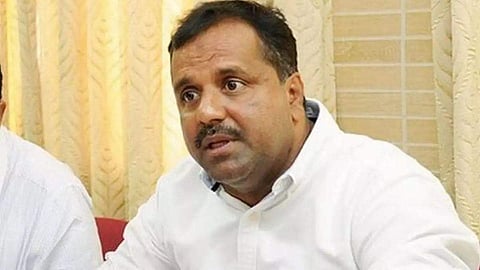
The Karnataka government will introduce measures to curb excessive hospital billing, regulate medicine mark-ups and improve transparency in treatment costs, Health Minister UT Khader said on Thursday, October 22. The state will also formulate a policy to prevent hospitals from withholding deceased patients’ bodies over unpaid medical bills.
Speaking after a meeting with representatives of the Private Hospitals and Nursing Homes Association (PHANA) in Bengaluru, Khader said hospitals would have to display the rates of major medical procedures at their reception counters from November 1. They would also be required to maintain a register listing the prices of other procedures, given that hospitals offer more than 4,000 types of medical procedures.
“There are over 4,000 medical procedures offered by hospitals and it is not possible to display all the prices. Hence, we have directed them to put up large, readable boards listing the rates of important procedures and maintain a register with the prices of other procedures,” he said. PHANA has agreed to the proposal, he added.
The government is also seeking greater transparency in medicine pricing. Under an earlier order, hospitals across Karnataka were to disclose the purchase or landing cost and maximum retail price (MRP) of medicines on patient bills from November 1 and use the same prices for treatments. Hospitals were also instructed to display medicine price lists prominently in public areas, particularly near registration counters.
However, private hospitals have sought six months to implement the order. Khader said the government could not grant them such an extension without examining the time required to make the changes. The Food and Drug Administration commissioner and other officials would assess the implementation timeline and the government would decide on the next steps after the court hearing scheduled for October 27.
The minister said the government did not intend to push private healthcare providers into losses but maintained that stricter regulations were necessary. He also clarified that private hospitals would not be expected to charge the same rates as government hospitals, as prices could vary according to infrastructure, facilities and the level of treatment.
“There are differences in facilities, infrastructure and other factors that may account for some variation, but there should be a limit to how much hospitals can charge,” Khader said.
He expressed concern over the rising cost of private healthcare, particularly after the entry of foreign investors into the sector. Khader said hospitals run by doctors who own them generally kept prices under control, while hospitals acquired by foreign investors and operated as corporate chains charged steep rates, sometimes retaining their earlier names.
“According to my observation, after foreign investors have entered the healthcare market, the prices have gone up tremendously. We will discuss and see what best can be done,” he said.
The state government plans to approach the Union government to discuss whether foreign investment in healthcare should be restricted. If such investment is permitted, Khader said, there should be price caps to prevent excessive charges.
The Health Department is also examining the difference between the cost of medicines and the prices charged to patients. Khader said the department had undertaken an exercise to determine the actual landing costs of drugs and examine the margins added at different stages of the supply chain.
He cited cases in which injections costing between Rs 5,000 and Rs 6,000 were reportedly being sold for as much as Rs 65,000. The government plans to meet pharmaceutical manufacturers and distributors to address excessive mark-ups, particularly on medicines used in cancer, cardiac and kidney care, and to prevent unauthorised increases in MRP.
While scheduled drugs are subject to price controls, concerns remain over the prices of certain other medicines. The government will examine these concerns and consider asking pharmaceutical companies to print both the actual landing cost and MRP on medicine strips.
Khader said he had decided to meet pharmaceutical companies after private hospitals claimed they were procuring medicines at prices significantly higher than their manufacturing costs. The government wants to establish the actual costs and understand how prices increase before medicines reach patients.
The minister also announced plans for a separate meeting with insurance companies to address complaints of excessive billing for insured patients and simplify the claims settlement process. He cited instances in which a procedure costing Rs 1 lakh at a hospital could result in a bill of Rs 3 lakh.
The meeting with PHANA also addressed complaints about regulatory requirements involving the Fire Department, the Karnataka State Pollution Control Board and the Karnataka Private Medical Establishments (KPME) Act. The government will examine the representations made by private hospitals and take appropriate steps, Khader said.
The government will formulate a separate policy to ensure that hospitals do not withhold the bodies of deceased patients because their families have not cleared outstanding bills. Khader said families should not be subjected to financial pressure during medical emergencies or denied access to the bodies of deceased relatives over pending payments.
Follow TNM's WhatsApp channel for news updates and story links.
