
Karnataka will implement the Union government's revamped rural employment scheme, Viksit Bharat-Guarantee for Rozgar and Ajeevika Mission (Gramin) (VB-G RAM G), from July 1 despite continuing to oppose several provisions of the law and preparing a legal challenge before the Supreme Court.
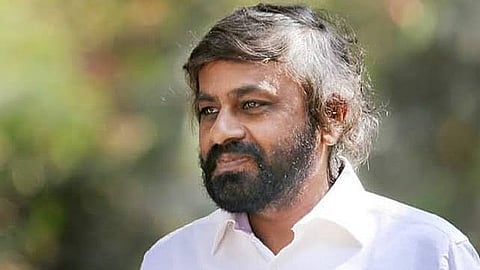
Announcing the decision on Wednesday, June 25, Rural Development and Panchayat Raj Minister Eshwar Khandre said the state government had decided to roll out the scheme in the interests of rural families, women and other vulnerable sections, even though it would substantially increase the financial burden on the state exchequer.
Eshwar said Karnataka had consistently objected to the replacement of the Mahatma Gandhi National Rural Employment Guarantee Act (MGNREGA) with VB-G RAM G, arguing that states were not adequately consulted before the new law was introduced. He said the state's petition challenging the legislation was ready and would raise concerns including the lack of consultation with states, changes to the funding pattern and provisions that, according to the government, weaken the role of gram panchayats.
While the state prepares to pursue the matter legally, Chief Minister DK Shivakumar has approved the implementation of the scheme from July 1, Eshwar said. A new budget head has already been created to accommodate the state's contribution.
The Minister said the Union government had made a normative allocation of Rs 5,709 crore for Karnataka under the new scheme. Of this, the state is expected to contribute Rs 3,806 crore, a sharp increase compared with the funding burden under MGNREGA.
Highlighting the financial implications, Eshwar said that between 2006 and 2026, the Union government had spent Rs 56,492 crore on MGNREGA works in Karnataka, while the state's contribution stood at Rs 4,821 crore. During the same period, the programme generated around 182 crore person-days of employment. Under the new framework, however, Karnataka will be required to spend Rs 3,806 crore in a single year.
The Minister reiterated the state's demand for a revision of the cost-sharing arrangement. He said Karnataka wants the Union government to restore the earlier funding pattern, or at least adopt an 80:20 ratio, arguing that the current framework places an unfair burden on states.
Eshwar also criticised provisions that prevent the generation of employment for 60 days during the agricultural season. Describing the restriction as "anti-farmer" and "unscientific", he said mechanisation had significantly reduced the availability of farm work, making rural employment schemes crucial even during cultivation periods.
The state has also sought the inclusion of 107 categories of work that have reportedly been excluded under the new scheme. Karnataka will raise these concerns at a meeting of state Rural Development Ministers convened by the Union government in Delhi on June 28, Eshwar said.
The Minister further urged the Union to increase wages under the programme, noting that the current wage rate had fallen behind Karnataka's revised minimum wage of Rs 375 per day.
Eshwar said Karnataka had set a target of generating nine crore person-days of employment annually under the scheme, with monthly targets ranging between 80 lakh and 90 lakh person-days. He added that the state was prepared to provide work to all eligible applicants from July 1 and would also take steps to protect the livelihoods of more than 7,000 contractual staff currently engaged under MGNREGA.
Separately, Eshwar said officials had been directed to examine amendments to rules governing the issuance of e-Swathu certificates for properties located in gram thana areas that lack supporting documents. The proposed one-time exercise would involve inviting public objections before certificates are issued.
According to the Minister, Karnataka has around 1.5 crore properties across 5,928 villages, of which 53.53 lakh have already been issued e-Swathu certificates. He warned that Panchayat Development Officers who delay issuing certificates beyond 15 days without valid reasons would face notices.
Eshwar also said 826 villages in Karnataka were currently facing drinking water shortages due to deficient rainfall. He noted that the state had recorded a rainfall deficit of around 42% so far this season, while groundwater levels had also declined. Last year, around 1,000 villages faced water scarcity, prompting the government to drill borewells to ensure drinking water supply, he added.
