
Subscribe
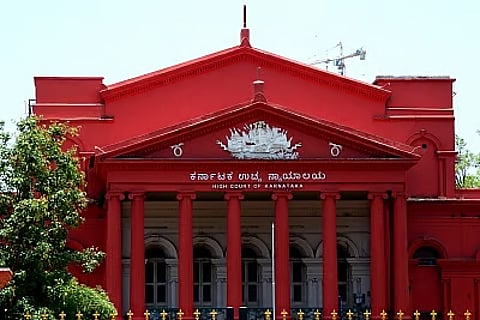
The Karnataka High Court has refused to quash a culpable homicide charge against a Mysuru father accused of allowing his 14-year-old son to drive. The car had crashed into a two-wheeler in 2020, killing three members of a family and injuring their younger son.
Justice M Nagaprasanna dismissed a petition filed by 51-year-old Nadeem ur Rehman, who sought to quash the charge under Section 304 Part II of the Indian Penal Code (IPC), which deals with culpable homicide not amounting to murder. The court said the prosecution must be allowed to establish at trial whether the father knowingly handed over the vehicle to his underage son, despite the foreseeable danger.
The accident occurred around 10 pm on December 10, 2020, near the Dandina Maramma temple on the Bengaluru-Mysuru Road. The car collided with a two-wheeler carrying Usha, 30, her husband Ramesh, 40, and their five-year-old son Monish. All three died, while their other son, Siddharth, sustained injuries.
According to the prosecution, Nadeem had handed the car keys to his son and permitted him to drive, allegedly on earlier occasions as well. The vehicle was a company car entrusted to Nadeem by his employer.
Nadeem contended that his son had taken the car without his knowledge or consent and driven it rashly, causing the accident. His counsel, senior advocate Pallava R, argued that the material could, at most, support a charge of causing death by negligence under Section 304A of the IPC, rather than culpable homicide under Section 304 Part II.
The defence argued that the more serious charge required proof that Nadeem knew his actions were likely to cause death. The tragic consequences of the accident alone, it submitted, could not establish the necessary criminal intent or knowledge.
Opposing the petition, State Public Prosecutor BN Jagadeesha submitted that statements recorded during the investigation indicated that Nadeem had himself handed the keys to his 14-year-old son. The prosecution also alleged that he had repeatedly allowed the boy to drive.
The police initially registered a case involving rash driving and causing death by negligence. During the investigation, they added the charge under Section 304 Part II and named Nadeem as the second accused in the chargesheet. After the Sessions Court rejected his application seeking discharge from the culpable homicide charge, he approached the High Court.
The High Court said the chargesheet contained material suggesting that allowing the child to drive was not an isolated incident. It rejected the argument that Nadeem could secure discharge merely by claiming that his son had taken the vehicle without permission.
The judge said that the prosecution’s case rested on an alleged positive act by the father, namely handing over the keys and permitting the minor to drive. Whether that conduct crossed the legal threshold from negligence to culpable homicide would depend on the evidence presented during trial.
The court also cautioned against treating the number of deaths as proof, by itself, of the more serious offence.
“Three precious lives have been extinguished and another seriously injured. The magnitude of that tragedy, by itself, cannot constitute Section 304 Part-II; criminal culpability cannot be measured by counting the dead,” it said.
The judge added that the distinction between causing death by negligence and culpable homicide lay in the nature of the accused’s mental state. The prosecution would have to establish whether Nadeem had the knowledge required under Section 304 Part II, rather than relying solely on the fatal outcome.
The court further said that proceedings at the discharge stage could not become a “mini trial” to decide whether the father’s version or the prosecution’s allegations were true. Those competing claims would have to be tested through evidence before the trial court.
Expressing concern over accidents involving underage drivers, the High Court referred to figures indicating that Karnataka recorded 751 accidents involving minors in 2025-26, out of an all-India total of 11,890. The state ranked sixth nationally in this category, according to the figures cited by the court.
“The steering wheel of a motor vehicle cannot become a plaything in the hands of a child, nor can a public road become the playground for such indulgence,” Live Law reported Justice Nagaprasanna saying.
The court said parents and guardians could not treat the legal prohibition on minors driving as a matter of convenience and then seek complete protection from criminal consequences when foreseeable risks resulted in tragedy.
“Parenthood carries not merely affection and authority, but responsibility. Roads are shared public spaces, not training grounds for unlawful indulgence,” it said.
The High Court dismissed Nadeem’s petition, allowing the prosecution on the culpable homicide charge to proceed. It clarified that it had not determined his guilt and directed the trial court to assess his culpability independently on the evidence and in accordance with the law.
Follow TNM's WhatsApp channel for news updates and story links.
