
Subscribe
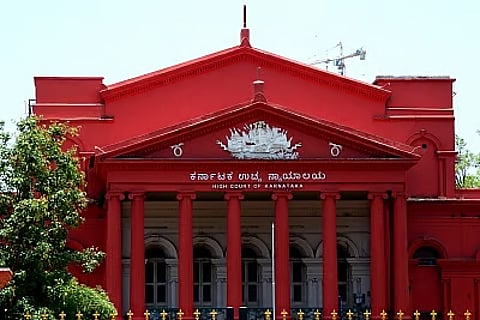
The Karnataka High Court has quashed criminal proceedings against former BJP MLA DN Jeevaraj and two election officials over alleged tampering with postal ballots in the 2023 Sringeri Assembly election. The court held that the complaint, filed nearly three years after the original counting, was too delayed to sustain the prosecution.
In an order passed on November 21, Justice M Nagaprasanna set aside the FIR registered by Chikkamagaluru Town Police against Jeevaraj, former Deputy Commissioner KN Ramesh and Returning Officer TR Vedamurthy. The case involved allegations of forgery, criminal conspiracy and violations of the Representation of the People Act (1951).
The complaint was filed on May 3, 2026, by Sudhir Kumar Murolli, an election agent and authorised representative of Congress candidate TD Rajegowda. It alleged that postal ballots had been tampered with after the original counting on May 13, 2023, including ballots that had been cast in Rajegowda's favour. The complaint also alleged that ballot box seals had been removed and ballot paper account sheets altered to secure an electoral advantage.
The complaint came hours after a recount ordered by the High Court resulted in Jeevaraj being declared the winner of the Sringeri constituency. The original result had gone in Rajegowda's favour by a margin of 201 votes, with 279 postal ballots rejected.
Jeevaraj had challenged the election result through an election petition. On April 6, 2026, the High Court partly allowed his petition and directed the Returning Officer to re-verify the 279 rejected postal ballots and recount all postal ballots. The recount was completed on May 2, following which Jeevaraj was declared elected. The Supreme Court subsequently stayed the operation of the revised result, and Rajegowda continues as the MLA under its interim order.
The three accused approached the High Court seeking to quash the criminal case. They argued that the complaint was an attempt to reopen matters already considered in the election petition and that the nearly three-year gap between the original counting and the complaint was unexplained. They also contended that an election agent could not initiate a private complaint for offences under the Representation of the People Act.
The High Court did not accept the argument that election-related criminal complaints could only be taken to the Election Commission or an election officer. Referring to the relevant legal provisions and Supreme Court judgments, Justice Nagaprasanna said a private complaint could be maintained in appropriate circumstances.
However, the court found the delay in this case significant. It noted that the ballot boxes had remained sealed in strong rooms under police security from May 13, 2023, until they were opened for the recount in May 2026. It also observed that Murolli could have approached the authorities in 2023 itself if he suspected irregularities in the original counting.
The court said the complaint had been filed only after the recount went against Rajegowda and Jeevaraj was declared the winner. It held that the timing and the unexplained delay made the criminal proceedings unsustainable.
“With the declaration of the results after recounting in which the candidate loses and accused No.2 is declared as a winning candidate, investigation by the jurisdictional police on a complaint cannot emerge. It is undoubtedly hit by delay,” the court said.
It also observed that the delay had led to embellishments in the complaint. The court said vague and general allegations made after such a long interval could not be used to subject the accused to investigation or trial. It further questioned the implication of prosecuting election officials over the declaration of Rajegowda as the returned candidate, when the alleged irregularities in the original counting had not been challenged at the time.
The FIR invoked sections 143, 465, 468, 471, 120B and 149 of the Indian Penal Code, along with section 136 of the Representation of the People Act.
Follow TNM's WhatsApp channel for news updates and story links.
