
Subscribe
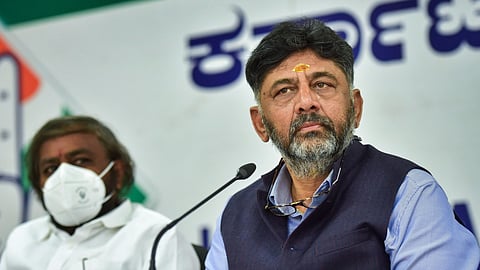
It is heartening to note that Karnataka’s CM DK Shivakumar has recognised that “the power, dreams, thinking, and hard work of our youth are the divine forces that determine India’s future.” He recently went on to promise that safeguarding the ideas, aspirations, and rights of youth “must be the foremost priority of any responsible government”. This is indeed a reassuring statement for our youth.
But there may be a long way to go before every single youth of the state becomes “a bright shining lamp, or ‘Siri Hanate’, illuminating the state’s future”, as the CM wishes.
In a hard-hitting article in Praja Pragathi, Dr MG Priyanka, an Assistant Professor in Tumakuru University, has recounted how “the futures of thousands of children are perishing every morning right before our eyes in Karnataka”.
She cites instances of the following cruel paradox: “Where 14-year-old children should be wearing a school bag on their backs, the crushing weight of hunger has forced them to carry iron rods, loads of bricks, and grease-stained garage tools!” She narrates examples of a 15-year-old girl in Bagalkot’s brick kilns, stacking hot bricks at 2 am and weeping, "I want to go to school, Sir"; and how a 14-year-old boy’s grease-dipped fingers were crushed in the gears of the lathe machine that he was working on.
The harsh reason for this state of affairs among our teenagers exposed by the Union Ministry of Education’s UDISE+ report is that Karnataka bears the shame of ranking first in the entire country for high school dropouts (Grades 9 and 10), recording a shocking overall dropout rate of 18.1%, and the even more shocking rate of 22% for boys. In contrast, the national average is half our figure at 9.5%. During the transition from high school to the Pre-University Course (PUC) level, the net enrollment rate in the state sinks drastically to 62.4%.
But are our schools fit enough to retain the drop-outs?
Dr Priyanka again gives the revealing statistics of how in the border regions of Yadgir and Raichur, 60 to 70 9th-grade students sit all day staring at empty blackboards because there are no permanent teachers for mathematics and science. Teacher shortages in Kalyan Karnataka stand at 35.8%. In Pavagada, a 14-year-old girl stopped drinking water all day because there was no toilet at school and ended up hospitalised with a severe urinary tract infection.
In 19.3% of government high schools across the state, there are no separate toilets for girls, and among existing toilets, 31.4% are unusable. 42.5 % of schools in rural areas of Chamarajanagar and Vijayapura lack proper bus connectivity, recounts Dr Priyanka. As a result, girls drop out fearing harassment from eve-teasers while walking long distances to schools along lonely roads.
As a consequence of the period of compulsory education ending at 14 years, children get trapped in exploitative labour and girls in child marriage. Dr Priyanka cites the example of a 14-year-old girl, who was forced to tie the knot with a 45-year-old man, “weeping as her play dolls still lay inside her school bag”! About 38.7% of out-of-school girls end up as unpaid domestic helpers in their own homes, and as caretakers of younger siblings, she says.
Can this cruel paradox of hands holding cement bags instead of books be reversed by implementing with determination the salubrious recommendation made by the committee that prepared the State Education Policy to extend the period of compulsory education to 18 years; simultaneously raise the minimum age for employment also to 18 years, and ensure their strict enforcement so that these children remain in the safety of schools, enjoy their childhood and savour the joy of learning and empowering themselves?
Since 68.2% of poor families have an annual income that is less than ₹1.2 lakh, they migrate for work along with their children. Due to this, over 15% of children stay away from school for 5 months every year, Dr Priyanka notes.
To what can all these deficiencies be attributed?
In the suo motu PIL taken up by the Karnataka HC in 2013, the prayer (Recommendation No. IV) by this writer and party-in-person was that the necessary budget to fulfil all RTE Act norms in the State’s schools should be allocated within a time-frame. In response, the State had stated that “proposals are made every year based on the available funds allocated. Hence, the total requirement of infrastructure is not considered during the budget proposals” and “if sufficient funds are allocated, the entire infrastructure need including construction and repair can be fulfilled by next 5 to 10 years”.
This, when all RTE norms were supposed to be fulfilled by 2015, and it is now more than 10 years after that deadline. This is the result because the state’s budget for education has been consistently less than the national average and is at 10.8% this year, when the national average for all States is 15%. It is definitely far less than the recommended 6% of the GSDP.
But the current plans being mooted to solve these problems are to merge thousands of schools and create 1000 well-equipped schools at GP level with CSR funds. Another proposal is to make private schools adopt rural schools to “help improve education standards.”
Whether these measures will mitigate the problems, or result in the abdication of the government’s duty to provide the constitutional Right to Education, needs to be weighed. What will be the outcome if private companies contributing to school development are allowed to be on the school's management committee?
Would these efforts to solve problems by involving private entities arise if the Hon’ble High Court’s order of 22.06.2023, in the suo motu case taken up by the HC in 2013 (WP 15768/2013), had been followed?
In response to the government’s statement on the budget, the HC, in its order of 22.06.2023, stated in Para 10: “We may state here that we are not satisfied with this response….. for the simple reason that such response would fail to meet the requirement. ... Unless such budgetary allocation of funds is made, in our opinion no fruitful purpose would be served. As such, we reiterate that the State Government must make a specified allocation of funds in the budget for these purposes to fulfil the RTE norms, particularly relating to the infrastructure in the schools within the stipulated period.”
In their further order dated 09.10.2023 the Hon’ble HC expressed its pain on the lack of basic facilities in schools in the following observation: “….Because of lack of basic facilities, many Government Schools are being closed down and on the other, as there is no option, for the parents even if not financially sound than to admit their wards to the private schools, wherein obviously much higher expenses needs to be incurred. This unfortunate reality hurts us, to say the least, since such a situation frustrates the very object of making primary education a Fundamental Right now as enshrined in Article 21A of the Constitution of India.”
It is lamentable that the same excuse of lack of funds has been made by the State in its Report dated 29.8.25 when the Hon’ble High Court had admonished it in its order dated 22.06.2023 for giving such an excuse. This indicates a total violation for two years by the State of the above order of the Hon’ble High Court.
While the State laments before the Court that it does not have the funds to fulfil the Right to Education norms for infrastructure and manpower, etc., a report in ‘The Hindu’ of 10.8.26, states that the Unconditional Cash Transfer (UCT) of five guarantee schemes of Karnataka, are amounting to almost three-quarters, or 73.59% of the State’s budget for education, which is Rs. 35,527.29 crore. The report states that overemphasis on UCT schemes is eating into investments needed for the public service sector, such as education.
Notably, most successful programmes for preventing dropouts worldwide are based on Conditional Cash Transfers (CCT), such as Brazil’s Bolsa Família programme, which provides monthly financial aid to adolescents who adhere to a minimum school attendance of 85%. Isn’t it time we converted the Unconditional Cash Transfer (UCT) schemes to Conditional Cash Transfer (CCT) schemes, which make it mandatory for those receiving these benefits to send all their children to school so that the cash transfers result in some measurable outcomes empowering our children for life?
A recommendation made by this writer in the above-mentioned suo motu PIL is that of placing a Conditional Cash Transfer (CCT) bond of Rs. 10,000 in the name of every vulnerable child at the time of enrolment in a school, which matures to Rs. one lakh if the child completes the period of compulsory education without dropping out. Then Hon’ble CJ Abhay S. Oka had recommended to the state government to consider implementing this CCT scheme. When the government said that they cannot implement the scheme, Justice Oka asked them to reconsider their decision. But a response from the government on this is still awaited.
The CM has lauded the Yuva Nidhi guarantee scheme of the government, which provides monthly assistance of Rs 3,000 to unemployed graduates and Rs 1,500 to diploma candidates, as a measure “to bolster the financial security, self-reliance, and self-confidence of the youth”. But a statement by the medical education minister himself (in the ToI/Oct 14, 2025) is that, among the over 2 lakh beneficiaries of the Yuva Nidhi scheme, only 1,500 youths underwent skill training so far.
Is this not one more area where this unconditional cash transfer (UCT) is converted to a conditional cash transfer (CCT) scheme, making it compulsory for the beneficiaries to undergo skill training so that they become employable? The minister also announced that a mega skill training institute will soon be established in one constituency.
But wouldn’t implementing the SEP recommendation of integrating the compulsory secondary education period (9th to 12th grade) with industry be a better measure, so that children (who do not have an aptitude for academics) emerge at 18 years with certified skills, which enable them to get employed and stand on their own feet? In the absence of this linkage of secondary education with industry, youth become unemployable graduates with no skills.
The CM has promised youth that “giving wings to your dreams and building a safe, fair, and bright future for you is the primary responsibility of our government” and that the success of youth is “the ultimate and sole goal of my life and my government”. This promise reassures our youth, and one hopes that this promise will be kept by this government.
The writer is the Executive Trustee of CIVIC-Bangalore.
Views expressed are the author’s own.
Follow TNM's WhatsApp channel for news updates and story links.
