
Subscribe
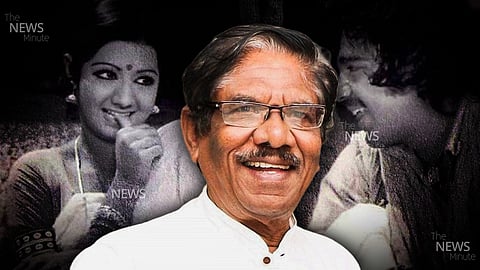
Renowned Tamil filmmaker Bharathiraja passed away on June 10, leaving behind a legacy of nearly five decades as a director, screenplay writer, producer, actor, and singer. Hailing from Allinagaram village in Theni district, he revolutionised Tamil cinema, documenting the everyday life of the hinterland, and reoriented the way nativity and rural subjects were portrayed on the silver screen.
For a generation of Tamil cinema audiences, it was impossible to miss Bharathiraja’s debut film 16 Vayathinile (1977) and the song, Senthoora poove, which blared from speakers at weddings in the 1980s and 1990s. The iconic opening line “En iniya Thamizh makkale” (My sweet Tamil people) in his distinctive booming base voice and his emotive voiceovers in the beginning introducing the film would make the audience erupt in applause in cinema halls.
I still recall watching his films in my childhood days on a BPL TV with an antenna. Doordarshan, and later cable television, would routinely play classics such as Vedham Pudhithu, Oru Kaidhiyin Diary, Muthal Mariyathai, Kizhakku Cheemayile, Pasumpon during weekends and in the afternoon movie slots on. Later, as a researcher on Tamil cinema, caste, and southern Tamil Nadu, my initial engagement with Tamil cinema began with Bharathiraja and his rural cinema, reading both journalistic and scholarly essays about his films in Tamil and English.
The Tamil film industry was marked by the dominance of MGR and Sivaji in the 1970s. Bharathiraja was compelled to innovate in order to carve out his own space and thus emerged neo-nativity cinema. Neo-nativity — a term coined by cultural theorist Sundar Kaali — portrayed life in the countryside of southern Tamil Nadu in a realistic way. For the first time, the camera shifted from the confines of studio sets to the real landscapes of ‘bucolic’ villages. These films were centred on nativity and rural settings, showcasing the stark realities of village life.
Though the village setting can be found in earlier decades, which Kaali terms “old-nativity films” (pre-1970s), the neo-nativity films emphasised a revisit to the social and cultural roots of Tamil villages. This cinematic intervention brought the audience to the “idyllic and unadulterated essence of Tamilness” say film scholars Selvaraj Velayutham and Vijay Devadas.
The scenes depicting the village market, rituals, jallikattu and silambam — both caste- and macho-endorsed village sports – and the innocence, ignorance, feuds, and bravado of the villagers — offered a novel experience for urban audiences.
His films took a different approach from the earlier cinema, avoiding puranic, mythological, and folkloric stories with melodramatic presentation and focusing on realistic, anti-sentimental stories with down-to-earth characters. By showcasing the everyday lives, caste tensions, struggles, and hurdles of the village from his lived experience in southern Tamil Nadu, Bharathiraja challenged established conventions of Tamil cinema and revamped the way films from the 1950s to the early 1970s depicted rural subjects. He changed the language of Tamil cinema by introducing a new aesthetic grammar.
Apart from 16 Vayathinile, films such as Puthiya Vaarpugal (1979), Kallukkul Eeram (1980), Mann Vasanai (1983), Muthal Mariyathai (1985), Puthu Nellu Pudhu Naathu (1991), Nadodi Thendral (1992), Kizhakku Cheemayile (1993), Karuthamma (1994), and Pasumpon (1995) are Bharathiraja’s early contributions to the neo-nativity genre.
Films like Kizhakke Pogum Rail (1978), Alaigal Oivathillai (1981), and Vedham Pudhithu (1987) tackle the barriers of caste and religion in relationships, while Muthal Mariyathai (1985) is a sensitive and mature portrayal of platonic love between a middle-aged upper caste man and a younger lowered caste woman. Karuthamma is a hard-hitting film that addresses the social evil of female infanticide, which was then rampant in the Usilampatti region of Madurai.
The plots, cinematography, characterisation, costumes, lyrics, and dialogues added authenticity to the native nature of the villages. His films picturised the dry, arid southern Tamil Nadu, its red and black soil, and the silhouettes of palmyra trees. He replaced the exaggerated, highly dramatised classical Tamil dialogues with local idioms, proverbs, and regional dialects. He presented his male protagonists in simple, understated appearances with minimal makeup, and chose dusky-skinned women leads rather than the standard fair-skinned ones dominant in Tamil cinema at the time.
The practice of tutelary/folk deity worship, along with the customs and traditions associated with different caste groups and the people of southern Tamil Nadu, is widely documented in his films, adding an ethnographic texture. Frequently, with composers like Ilaiyaraaja and Devendran, and later with AR Rahman, the earthy, folksy sounds and music added authenticity to the nativity scenes in his films. The soundscape of ballads, folklore, laments, dance, drama, and village festivals created a strong attachment in the audiences.
Beyond neo-nativity cinema, Bharathiraja demonstrated remarkable versatility by excelling equally in urban narratives and the portrayal of city life, adding unprecedented richness to Tamil cinema. He made suspense/psychological crime thrillers such as Sigappu Rojakkal (1978), Tik Tik Tik (1981), and Oru Kaidhiyin Diary (1985). Nizhalgal (1980) highlighted the harsh realities of urban unemployment, poverty, and dashed dreams. Pudhumai Penn (1984), Kizhakku Cheemayile (1993), and Anthimanthaarai (1996) are some of his serious social dramas.
The Bharathiraja cinema pattarai (school of filmmaking) served as a foundational training ground for several influential directors in Tamil cinema, including Bhagyaraj, Manivannan, Ponvannan, Seeman, Parthiban, Manobala, Pandiarajan, RV Udayakumar, and Leena Manimekalai, all of whom began their careers as his assistant directors. Following Bharathiraja’s success, an array of films and filmmakers also arrived from Madurai and southern Tamil Nadu, contributing to the continuum of nativity and rural cinema.
Many young directors, however, have rechanneled the idea of the neo-nativity genre into caste-themed nativity films. The prominent films of the 1990s and 2000s primarily depicted dominant-intermediate caste characters perpetrating violence in feudal settings. Films such as Chinna Gounder (1992), Thevar Magan (1992), Ejamaan (1993), Nattamai (1994), and many others were centred on dominant castes, reflecting the remnants of the feudal power structure in Tamil Nadu villages. This brought forth both the beauty and brutality of the village stories.
Affectionately known as Iyakkunar Imayam (pinnacle among directors) by his legions of fans, Bharathiraja was a transformative force in not just Tamil but Indian cinema. He leaves an irreplaceable footprint, a benchmark in the century-old history of the Tamil film industry. We can undoubtedly call him the gamechanger of Tamil cinema.
From now on, the phrase En iniya Thamizh makkale in Bharathiraja’s voice falls silent.
Deivendra Kumar A is a PhD research scholar and ICSSR doctoral fellow in the Department of Communication at the Sarojini Naidu School of Arts & Communication, University of Hyderabad.
Views expressed are the author’s own.
