
Subscribe
Connecting the Unconnected is a monthly column by the Digital Empowerment Foundation (DEF) that explores how technology can drive inclusion and governance in India. The column focuses on how the digital divide impacts communities differently and advocates for equitable, citizen-informed solutions that ensure technology empowers rather than excludes.
While artificial intelligence (AI) is not a recent technology, in the last few years there has been growing opposition to it, especially the data centres that power it. Now these once hidden facilities are becoming very central to conversations about technology, growth, and planetary justice. Communities globally are protesting against the setting up of data centres arguing that their construction or expansion will negatively impact their quality of life.
Why? Simply for the kind and scale of resources these data centres consume.
While data centres were part of our digital landscape for decades and helped in functions including web search and data storage, with AI and large language models, they now need massive computing power, real-time data processing, and continuous uptime as compared to traditional data centres. To support this evolution, they also need massive amounts of resources like water, power, and land – in a capacity that is unimaginable.
A standard AI data centre typically consumes as much electricity as 100,000 households, while some ultra-large-scale centres may use 20 times that amount. When it comes to water, a 1 MW data centre can use up to 25.5 lakh litres of water annually just for cooling – this is equivalent to the daily water consumption of approximately 300,000 people.

Despite the opposition, countries worldwide are adopting AI and investing heavily in the data centre market. As per S&P Global’s report, investments in the worldwide data centre market reached $61bn in 2025 and are projected to expand at a faster rate over the next five years than they did in the previous five years. While for some countries AI is important for technological dominance and productivity, for others it promises investments and regional development.
Other reasons also include an increase in internet reach, data consumption, as well as global data generation, which is expected to reach around 400 zettabytes (ZB) by 2028, nearly 2.7 times more than it was in 2024. With the US and China leading the data centre market by collectively commanding over 60% of global capacity, countries across Europe, the Middle East, and the Asia Pacific are also racing to establish their own AI data centres for ‘digital sovereignty’.
What is India’s approach?
India, being one of the world’s fastest growing economies, is also trying to establish itself as a major global data centre hub, by tripling its data centre capacity since 2020 to reach approximately 1.5 GW, with projections estimating growth to around 6.5 GW by 2030. The sector’s investment commitments have also reached a cumulative of USD 126 billion by the end of 2025, including USD 56.4 billion in 2025 alone.
Apart from investment flows, data security and sovereignty are also cited as main reasons. For instance, despite hosting nearly 20% of the world’s data, India only has 3% of global data centre capacity. On the other hand, the Digital Personal Data Protection (DPDP) Act, 2023 also emphasises the need for a strong domestic infrastructure for data protection.
Other regulations, such as the RBI’s rule to store payment data in India, or SEBI’s requirement for regulated entities to keep data on Indian servers, as well as the draft National E-Commerce Policy, also suggest that all data from Indian consumers, including IoT and platform data, should be stored locally. Moreover, the escalation in data centre expansion is also supported by the existing regulatory environment, the national level incentives, and state subsidies.
While the national level data centre policy is still a draft, state governments have long taken a lead in shaping the sector’s growth in their respective states by welcoming the big tech AI leaders through subsidies, incentives, and reliable infrastructure. States like Uttar Pradesh and Karnataka are offering financial benefits such as land subsidies, tax exemptions, and lower land costs, whereas Maharashtra and Telangana have categorised data centres as an essential service. Tamil Nadu takes a different approach, emphasising on sustainability while allowing extensive use of resources like water.
Overall, while many states talk about green energy and efficiency, their policies strongly focus on growth and investment, without strict compliance and transparency standards and requirements when it comes to resources such as water, land, and power.
What does this mean for communities in India?
The growing resistance to AI data centres has also come home. In 2024, Rest of World reported on how communities in Telangana are responding to the establishment of data centres in their neighbourhood, including concerns related to land acquisition and pollution.
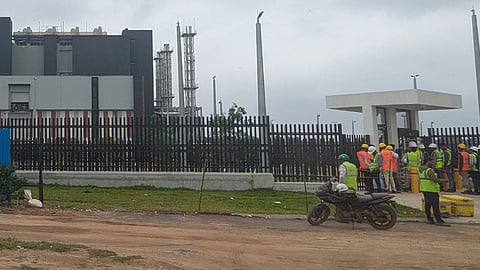
To understand these in more detail, DEF published a research report on the socio-environmental implications of data centres in two villages – Mekaguda and Begarikancha in Telangana’s Rangareddy district – focusing on the questions of land, water, power, local livelihoods, and aspirations that are emerging due to the local data centre expansion.
The report highlights that there are two ways in which impacted communities can be perceived. For instance, communities that are indirectly affected by these developments are the citizens of the state, as the state offers multiple fiscal and non-fiscal incentives and subsidies to these big tech companies, which are already quite rich. These include dual grid networks for uninterrupted electricity, subsidised power, land and fuel for backup generators, 50% rebate on building fees, exemption from inspections under key labour laws by allowing self-certification, exemption from statutory power cuts and the Telangana Pollution Control Act (except large IT parks), and most importantly, being declared essential services under the TS Essential Services Maintenance Act.
The report argues that there is a need to clarify how AI data centres will contribute to achieving broader sustainability and economic targets, especially if they require resources that are meant for the use of citizens and have consequences on the workforce and long-term environmental impacts.
During an interview, Sahana Goswami, a water expert at the World Resources Institute, explained, “It’s not that water will run out entirely, but the stress on the supply will definitely increase. More vulnerable groups, especially those in informal settlements, are less likely to receive regular water, while even better-served areas may shift to alternate-day supply, something already common in summer but likely to become more acute.”
Furthermore, the communities that are directly affected are local residents whose livelihoods are changing due to the constant shift in local development planning in the last few years, in the form of creating industrial corridors such as Pharma city, AI city, Bharat city, Future city, etc, that are also changing the local industrial and agricultural landscape.
“What we have done till now is agriculture. And then we are doing dairy. Somehow, we are surviving. But once we lose the land, it is going to become difficult for the next generation,” a local farmer said.
Among the farmers, it is mostly the marginalised who are impacted; many of them have also filed a petition in the court regarding land acquisition.
A local community leader from Rangareddy district further noted, “It is SC & ST people who are mostly impacted by the land acquisition, as it is they who had the assigned lands. One acre of land, whose market price is Rs 1 crore, only got Rs 7.9 lakh. Now, even if you take that money and want to buy property somewhere else, it will be more than Rs 10 lakh at least. Because of this, SC, ST, and OBC people became even poorer.”
The study also points towards how local aspirations are also rising as they anticipate receiving more jobs in these data centres. However, this is in contrast to the positions available – such facilities offer fewer positions and require skilled professionals.
Communities living near the data centres pointed out that many people are unemployed. “They are not giving jobs. Many are educated, but they don’t have jobs. We wish more jobs are created here,” one resident said.
Moreover, even if people are offered jobs, they are often non-technical. “Our people are working there as security guards or sanitation workers despite having professional degrees,” a community member said.
The picture of the expansion of AI data centres in India – especially in states that are suffering from resource constraints related to power, water, and land – is certainly concerning. What is more concerning is how the value or profit creation by these industries will not reach local communities and ordinary citizens, despite the huge resource cost borne by them.
Therefore, there is a need to ask the larger questions: is AI ‘inherently beneficial’ and how states plan to evaluate these technologies and infrastructures in terms of long-term societal gain. And more importantly, whether the companies building such infrastructures deserve the additional privileges at all, especially when the social and environmental implications of the data centre expansion are so pronounced on the communities.
Read the full report here: Just AI, Just Land: Socio-Environmental Implications of Data Centers on Communities
Maitri Singh, Dr Arpita Kanjilal, and Mili Dangwal are part of the Research and Communications Division at Digital Empowerment Foundation.
Views expressed are the authors’ own.
Follow TNM's WhatsApp channel for news updates and story links.