
Subscribe
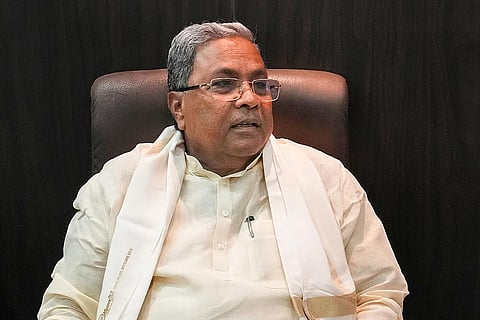
A week after Karnataka Chief Minister Siddaramaiah approved the establishment of a dedicated fact-check unit to monitor misinformation and disinformation on social media, the Editors Guild of India has urged the government to specify exactly what the unit will do and how it will function. “The Guild urges the Karnataka government to clearly specify the scope of and powers of the proposed fact-checking unit, as well as the governing mechanism under which it will operate,” the Guild said, adding, “We further urge the state government to undertake a consultation exercise with press organisations for developing this framework.”
On August 21, CM Siddaramaiah approved setting up a fact-check unit that would be led by experts who would track down fake news and find its source. The announcement was made amid rising concerns about misinformation in online spaces. However, the government hasn’t clearly elaborated on the unit’s mandate, and whether it will deal with such news both in mainstream media and on social media, and whether it would monitor reports on the government itself. The Union government had also recently announced a similar plan to set up a fact-checking unit that would monitor news related to the government which was heavily criticised as a move intended to clamp down on criticism.
The Editors Guild of India issued a statement raising concerns over the move on Sunday, August 27. The statement noted how Karnataka's IT & BT Minister Priyank Kharge said that "posts and reports that are tagged as fake by the fact checking unit will be taken down," and "if required, the government can also take penal measures under relevant provisions of the Indian Penal Code."
The statement reminded that the Guild has already filed a petition in the Bombay High Court challenging the Union government’s amendments to the IT (Intermediary Guidelines and Digital Media Ethics Code) Amendment Rules, 2023, that allow setting up of a 'fact checking unit' under which the executive will have sole authority to determine what is fake and what isn’t, along with powers to order taking down of content.
The statement also said, “While admittedly there is a problem of misinformation and fake news, especially in the online space, efforts to check such content have to be by independent bodies that are not under the sole purview of the government, lest they become tools to clamp down on voices of dissent. Any such monitoring framework should follow principles of natural justice, including giving prior notice, right to appeal, and judicial oversight. Such units should also be set up with due consultation and involvement of all stakeholders, including journalists and media bodies, so that press freedom is not tampered with.”
Watch: PIB to fact-check media? Indian govt's new way to censor media
