
By Dr K Santosh Mohan Rao
Spinal cord anomalies in children are common problems which are frequently missed. These are a spectrum of entities due to the abnormal development of the spinal cord within the womb. They are clustered under the umbrella term “TETHERED CORD SYNDROME” (TCS) a.k.a neural tube defects (NTD) or SPINA BIFIDA.
The normal human spinal cord ends in the lower back within the backbone and it’s appearance is likened to a horse’s tail. In tethered cords, the spinal cord gets abnormally stuck to various tissues which could be the skin, fat, abnormal bone or even lie completely exposed. As the child grows in height, this stuck cord gradually gets pulled and the blood supply is decreased resulting in the nerves becoming weak.
TCS is a spectrum. The worst is the myelomeningocele where the abnormal spinal cord is exposed completely in the lower back at birth with little function.
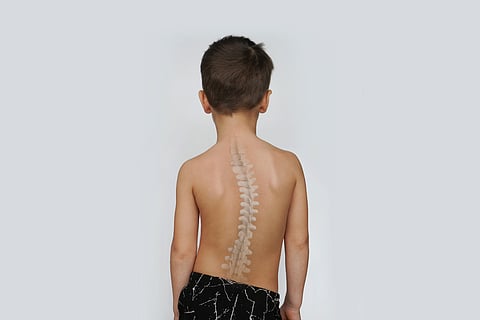
At birth, most babies with TCS have abnormal skin in the region of the lower back. There may be a fatty swelling, abnormal hair, a dark skin patch, a red spot or a small pit/hole in the line of the buttocks. Often, the skin is normal. The child as it grows, can have mildly bent feet (club feet), a bent back (kyphoscoliosis), unequal limb lengths or sizes and frequent urinary infections. There may also be pain, cramps or funny sensations in the calf and feet or frequent unexplained ulcers in the feet.
Tethered cords must be clinically suspected, when any of the above are found. It is confirmed by a doing an MRI scan of the spine.
Tethered cords are a fully curable condition provided they are diagnosed early. Delay causes irreparable nerve damage and results in weakness of both legs and in severe cases even renal failure.
Tethered cords can be diagnosed antenatally. For this, it is very important for atleast one proper antenatal anomaly scan to be done in mid-pregnancy by a perinatologist- (A doctor who specializes in the detection of abnormalities in the unborn child).
The treatment of tethered cord is neurosurgical . Early treatment before the onset of symptoms is recommended. The surgery is best done by a paediatric neurosurgeon. It is a specialized and safe surgery. The spinal cord is freed from the abnormal attachements and the normal structure is restored. The operating microscope and neuro-monitoring (nerve function monitoring during surgery) make this surgery safe. Post-surgery there is no restriction in the child’s handling or movement. Hospital stay is usually 3-5days. The child is followed up till puberty by a team comprising the paediatric neurosurgeon, pediatric urologist and the pediatric orthopaedician for best results.
Prevention: Administration of folic acid at least 6 months before planning a baby is vital to preventing spinal anomalies.

Dr K Santosh Mohan Rao, DNB (Neuro), MNAMS, Fellow Paediatric Neurosurgery (UK)
Consultant Pediatric Neurosurgeon
Rainbow Children’s Hospital, Guindy, Chennai.
24x7 Pediatric Emergency
Contact no: 044-4860 0000
This article was published in partnership with Rainbow Children's Hospital.