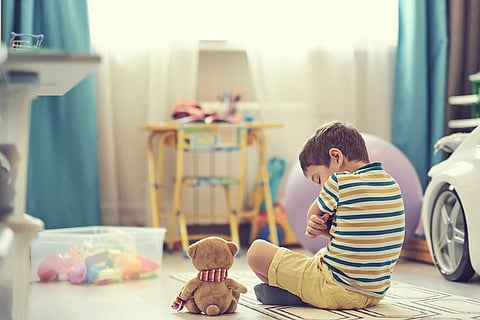

The world of child development is witnessing an unusual phenomenon with a steady rise in children with the autism spectrum disorder(ASD). The Centre for disease control (CDC) has indicated a prevalence rate of 1in 42 children in US. While the exact prevalence figure is not known in India it is thought close to 1 in 100 which is to be significant . While this itself is concerning what is more worrying is the lack of understanding into what causes autism and why this is happening, i.e cause and affect. Even more challenging is that there is no confirmatory laboratory test and till date no known cure for the condition.
In absence of cure for autism several different pharmacological and non-pharmacological treatments are being promoted. These are often confusing for parents who end up experimenting with treatments in hope of a cure. There is some evidence of improved outcomes with early Intervention which include sensory integration, focus on prelinguistic skills and communication, behaviour therapy and learning skills. This is currently the main stay of treatment of autism.
While complementary and alternative treatments like nuritional supplements, and dietary treatments, hyperbaric oxygen etc are available, these lack robust evidence. The National Medical Commision earlier this year banned the use of Stem cell therapy for treament of ASD. Some state led institutions and NGO’s offer therapy at nominal costs however this is not enough to match the need of growing numbers. Insurance coverage is at best non-existent. Parents end up investing thousands of rupees on the treatments and risk running out of funds.
The exact cause of autism remains yet unknown. Decades of investigations have not yielded a clear cause. While genetic causes are thought to play a role there is an increasing suspicion that environmental factors may contribute significantly. In our experience we are observing an increasing association with particular demographic factors such as both working parents, nuclear families staying away from home town and early onset of exposure with increasing screen time. Autism appears to be overrepresented in urban populations compared to rural.
On the macro-economic front the country is on an overdrive with urbanisation, increasing employment oppurtunities and migration. The present day nuclear family unit although more affluent has distinct differences in child rearing compared to traditional practices. Children spend lot more time in front of screens rather than interact with other humans including extended family. Technology, work pressures and social media are hijacking human attention. One can see how the easily the bandwidth of human interaction is disrupted. We have traditionally understood how important “the first 1000 days” of a child’s life is in their overall development. How does this ecosystem of altered relationships and interaction impact development? Many years ago psychologist Bromfenbrenner had elegantly captured micro and macro environmental influences on child development in his ecological model of child development.
The perceived rise in developmental problems in children during pandemic further strengthen the view of environmental influences and offers some insights into association with autism. These needs to be researched to understand the associations further.
Parents often ask if their child can lead a “normal life”. Being a spectrum disorder the severity of ASD varies from one individual to another. Some thrive well and in fact can be exceptionally able in their field of interest. Research on long term outcomes is limited and prognosticating future outcomes is not straightforward, it is thought that children with impaired language and cognition are more likely to face challenges with education, employment, relationship and independent living. Independence in the future is a real concern for parents.
In countries with social health such as the NZ and UK, families have residential options for children with special needs for eg if the family cannot cope. In India residential facilities are few and far between them and the costs are prohibitive. With increasing urbanisation and break up of the larger family structure and lack of social security it falls on the parent to take care of children with autism. With a rising population of children on the spectrum, an imperfect social support infrastructure and aging parents what does the future hold for these special children. Whose responsibility are they? More than ever there is a need for a societal response and involvement of policy makers to look into this huge gap.
With our rudimentary understanding of environmental influences we do not know if we can prevent autism in children. However this maybe the time to look at adverse influences on child development in a hyper technical, isolated and urbanised world. We will need to look at measures to protect the “first thousand days” of a child’s life such as promoting early mother child bonding, parentcraft, the importance of human connections and community and the need to educate parent and families about the importance of first thousand days. Antenatal care may be an oppurtunistic time to engage with parents.
As we stand on an important threshold where human development is based purely on GDP and numbers, it is important to understand and correct the factors which adversely affect children’s development. Children are our our most important human resource and it is vital that as a society we protect this phase of human development, through research, promotion of human connection and drawing from traditional ways of child rearing with multigenerational families. As an African proverb puts it “It takes a village to raise the child”.
What a parent /care giver can possibly do to reduce the risk
This article has been produced in association with Rainbow Children’s Hospital.

Dr PRATIMA GIRI
Consultant Developmental Pediatrician
MBBS,MD Pediatrics, C C T
Rainbow Children's Hospital, Banjara Hills, Hyderabad